
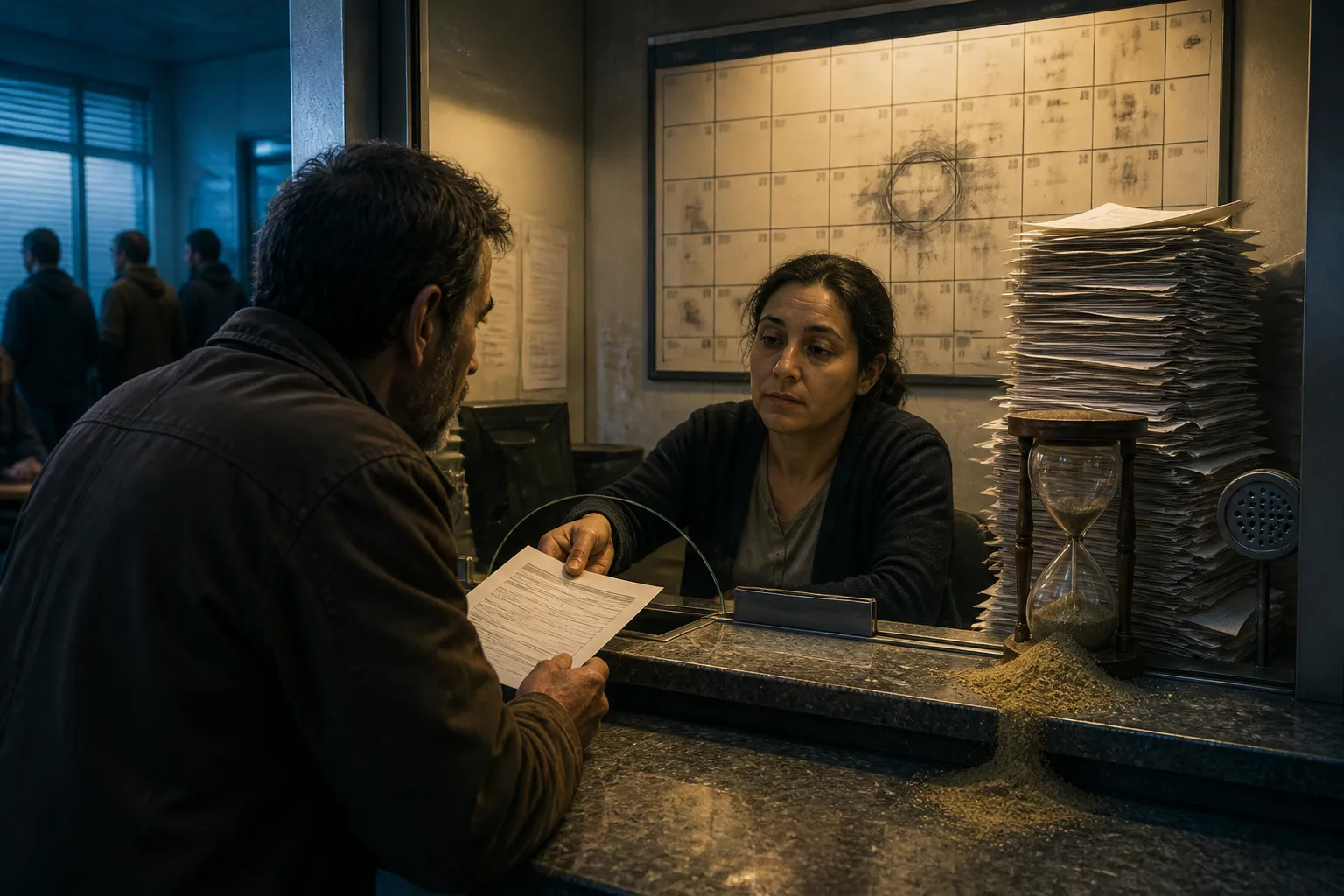
At a municipal counter, the clerk has a sticker for it. Or she would, if stickers were allowed. A resident asks when the permit will clear, and the honest answer is a number that has never once been right. The date on the form is a hope. The date on the calendar arrives later, usually without apology.
What the planning fallacy is
The planning fallacy is a cognitive bias in which people underestimate the time, costs, and risks of a future action while overestimating its benefits. Anyone who has promised a report by Friday and delivered it the following Tuesday has seen a small version. Daniel Kahneman and Amos Tversky introduced the idea in 1979. Their observation was plain: people forecast by picturing an idealized version of the work, not by checking how similar work turned out. In 2003 Kahneman and Dan Lovallo widened it to cover costs and risks, not only time.
One illustration from the monday.com blog is an estimate of three weeks that took seven, with a budget blown by 40 percent. Treat that as an example, not a measured study. The same source points to the Sydney Opera House, Boston's Big Dig, and Denver International Airport's baggage system as famous overruns.
Why the bias persists
The inside view looks at the project in hand: this team, these materials, this plan. Those details feel informative, and they make the work seem unlike the efforts that went badly. The outside view asks a duller question. How long did projects of this general type take, and by how much did they overrun?
Planners lean inward because the inside view is vivid and feels controllable. The outside view means opening records that may be thin or embarrassing. There is a fair objection, too. Some projects really do differ from their peers, and treating each job as a copy of the last is its own mistake. The sensible reading is to check the inside view against the outside one, not to throw it out. The source lists five causes: optimism bias, the inside view, anchoring, motivated reasoning, and underestimated complexity. They overlap and feed one another.
How anchoring and tidy stories drive forecasts
A forecast is usually a story. Step one finishes, step two begins, nothing intrudes. Because the story is tidy, it leaves out the rework, the waiting on other offices, and the dependency nobody mentioned. Real projects collect these the way coats collect lint.
Anchoring makes it worse. Once a first number is spoken or written down, later estimates cluster near it, even when new information points elsewhere. Two red flags follow from this. One is an estimate built only from the unique details of the current job. The other is a first estimate that later planning never revises.
Counter-strategies and their limits
The source names five: reference class forecasting, task segmentation, pre-mortem analysis, buffer planning, and historical data tracking. Reference class forecasting is the most direct use of the outside view. Find comparable past projects, look at how long they actually took, and start from that spread rather than from the plan's own story.
Segmentation splits one big guess into small ones, which tends to expose steps a single number hides. A pre-mortem asks the team to imagine the project has already failed and explain why, which gives people permission to say what optimism would suppress. Buffers add explicit time or money. Tracking keeps the records that make the next reference class possible.
A caution is due. The source is a vendor blog tied to a commercial product, and its list has not been independently evaluated. It also gives no step-by-step method for reference class forecasting or pre-mortems. Treat it as a starting point.
Questions to ask before trusting a schedule
Three questions do most of the work. Ask them in order, and write down the answers.
- Have similar projects run over before, and by how much? This is the outside-view question the source says people tend to skip.
- Has the task been broken into segments rather than estimated as one whole? A schedule built from many small estimates is harder to make look neat, which is part of its value.

- What could go wrong, imagined in advance? Asking before work begins, not after the first delay, gives risks a chance to be planned for.
- Was the first estimate ever revised? If the number has not moved since the opening meeting, anchoring is a likely suspect.
One gap should be stated plainly. The sources do not document how this bias plays out in municipal budgets, permitting, or public works. The general pattern is well described. Whether it has been measured at the city counter is a separate claim, and nothing here supports it yet.
Sources
Marcus Adeyemi-Holt is a house writer for Deeperpectives, where he examines how ordinary routines reveal larger patterns in work, memory, and place. He draws on years of reporting on municipal records and oral histories to trace the quiet forces that shape everyday life.