Author
Marcus Adeyemi-Holt
Marcus Adeyemi-Holt is a house writer for Deeperpectives, where he examines how ordinary routines reveal larger patterns in work, memory, and place. He draws on years of reporting on municipal records and oral histories to trace the quiet forces that shape everyday life.
25 articles


The Jam Table Problem and the Limits of a Famous Experiment
A 2000 study of tasting booths became a case for choosing less, but the wider evidence points to something more conditional.
By Marcus Adeyemi-Holt

The Grid on the Desk: What the Eisenhower Matrix Sorts and What It Leaves Unsorted
A tidy two-by-two for separating urgent work from important work, resting on a famous attribution and a product blog's confident claims that the evidence here does not yet support.
By Marcus Adeyemi-Holt

The Bias You Cannot See in Yourself
A 2015 study found that nearly everyone rates themselves as less biased than their peers, and that intelligence does little to close the gap.
By Marcus Adeyemi-Holt

Knights, Knaves, and How to Test What a Stranger Says
A puzzle genre built on two rules gives you a few simple checks, a worked example, and one case with no fixed answer.
By Marcus Adeyemi-Holt

Waking Up to the Question Beneath the Coin
The Sleeping Beauty puzzle rests on older questions about self-location, belief, and what it means to assign a probability at all.
By Marcus Adeyemi-Holt

The Castle Trick: How a Bold Claim Hides Behind a Modest One
A motte-and-bailey move lets a speaker retreat to a safe claim under pressure, then reclaim the bold one later. The accusation can also be misapplied.
By Marcus Adeyemi-Holt

Quiet Rooms and Pencils: How the Delphi Method Gathers Expert Judgment
Delphi puts experts through anonymous rounds of questions and feedback. It can blunt the loudest voice in the room, but the result depends on choices made before the first answer.
By Marcus Adeyemi-Holt

The Sign at the End of My Street
A familiar warning about children has never needed proof, and research on repetition suggests why it still feels true.
By Marcus Adeyemi-Holt

The Stack That Teaches You to Plan Backward
The Tower of Hanoi looks like a toy, but its rules and its move count quietly teach recursion and the cost of exponential growth.
By Marcus Adeyemi-Holt

The Total That Disagrees With Its Parts
Simpson's paradox shows how a pooled figure can reverse every subgroup comparison that produced it, and why the weights matter more than the arithmetic.
By Marcus Adeyemi-Holt

The Calendar That Empties Itself
A tidy logical proof seems to rule out a surprise test that ordinary experience says can still happen, and the gap between the two is where the puzzle lives.
By Marcus Adeyemi-Holt

The Old High Street and the Problem of What Survived
Survivorship bias may explain part of why old buildings look so good, but the evidence cannot yet say how much.
By Marcus Adeyemi-Holt

The Mast and the Paperwork
Odysseus's ropes make a good story, but a working precommitment needs four features, a named proxy, and a review date before anyone relies on it.
By Marcus Adeyemi-Holt

The Steps That Disappear
Expertise can hide its own steps from the people who hold it. Asking a beginner to explain it back is one way to find them.
By Marcus Adeyemi-Holt
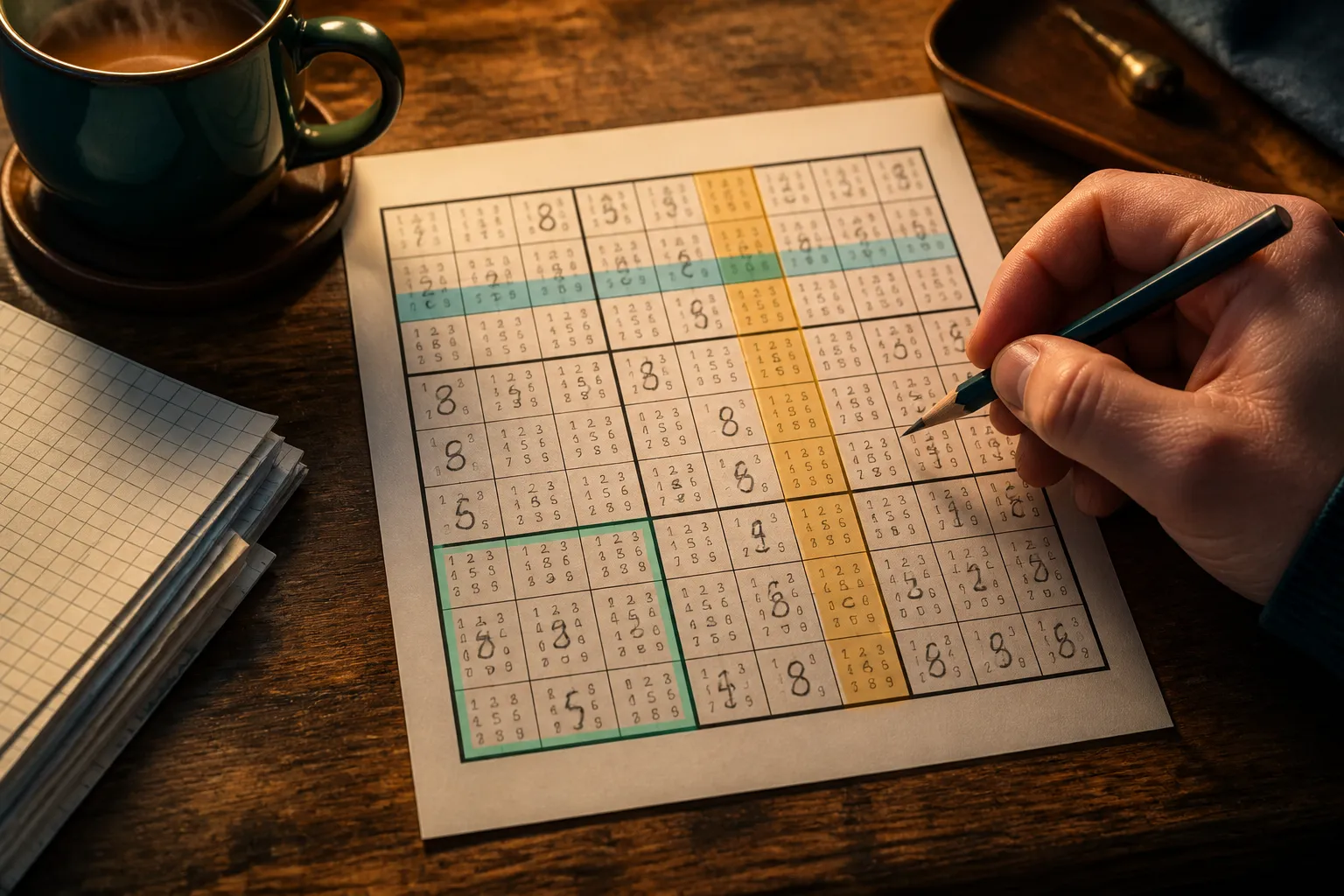
The Bookkeeping Behind Every Sudoku Solve
Fast solvers rarely get lucky; they track what each empty cell is still allowed to hold, and let those constraints do the work before any guess is made.
By Marcus Adeyemi-Holt

The Hot Hand Fallacy May Be the Math's Fault
A selection bias in how streaks are counted could mean the famous 1985 verdict against the hot hand rested on a miscalculated baseline.
By Marcus Adeyemi-Holt

The Old Place on the Corner
A sixty-year-old machine shop has changed nearly every part it owns, so the real question is which feature of the firm we are actually willing to call the same.
By Marcus Adeyemi-Holt
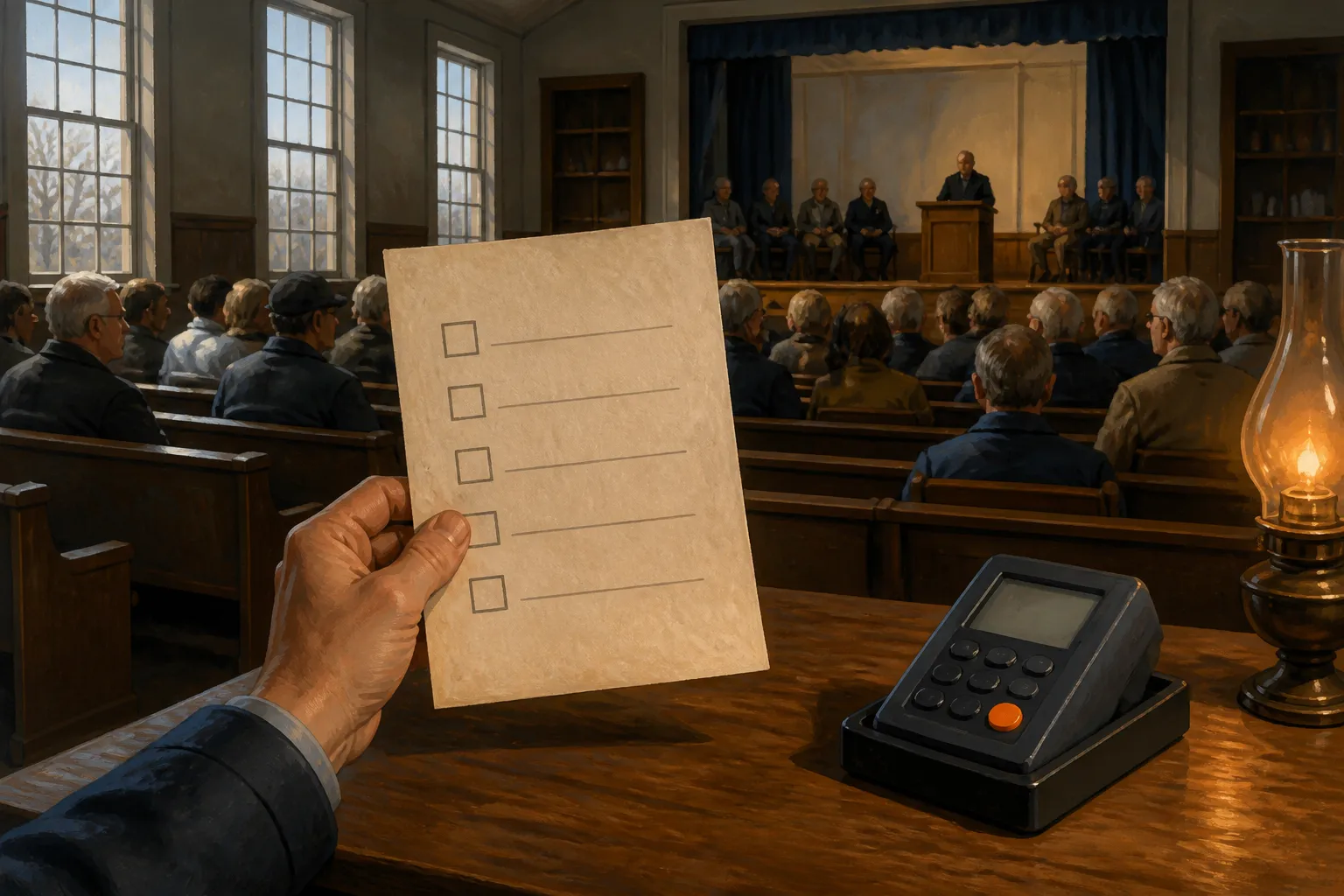
The Weight of the Way Things Have Always Been
Concord's Town Meeting tests whether a practice's age is a reason to keep it, or only a reason to ask what it still does.
By Marcus Adeyemi-Holt
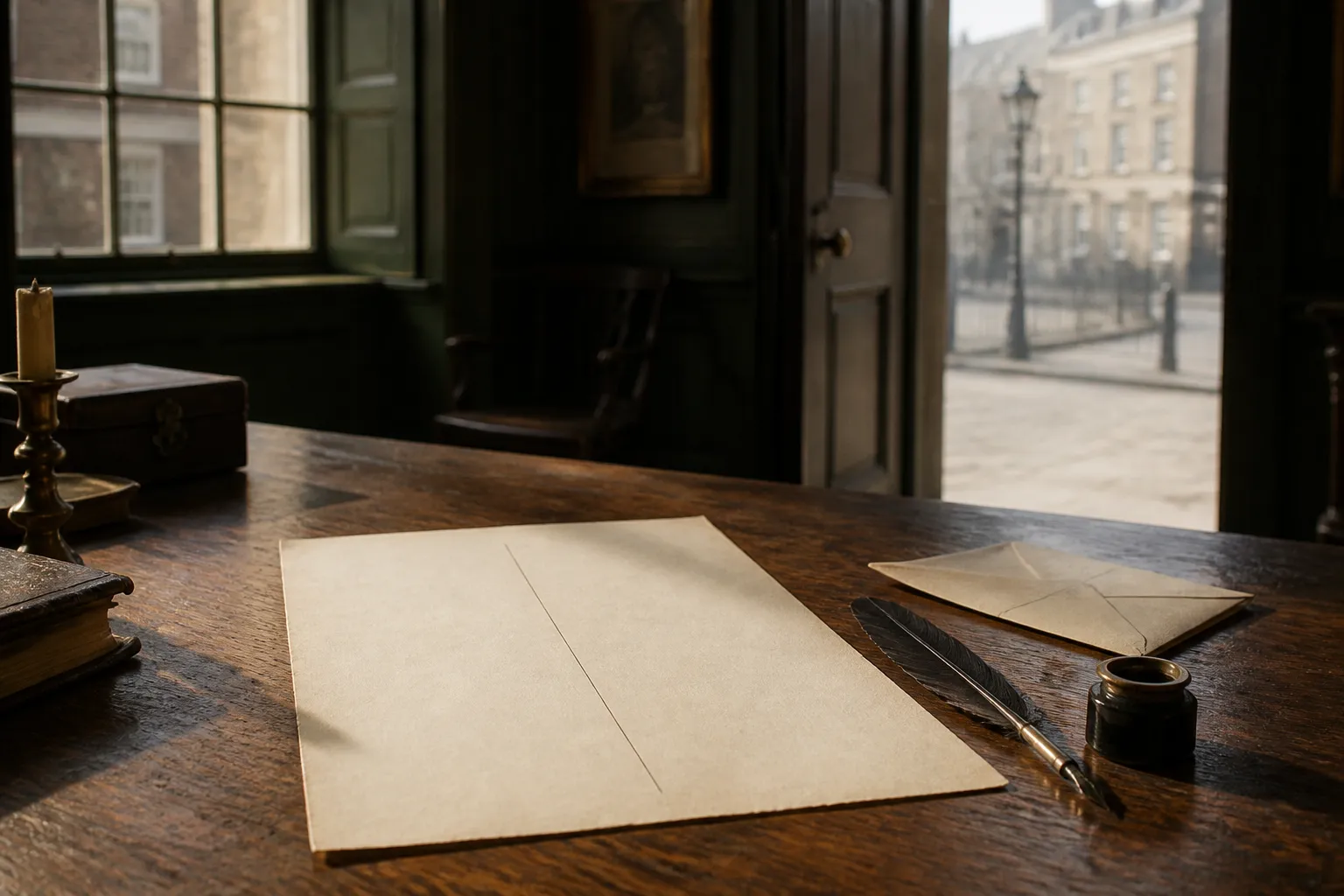
Franklin's Moral Algebra, Written Out on Half a Sheet
In 1772 Benjamin Franklin gave a worried friend a two-column method for weighing a major decision, and its quiet logic still holds up.
By Marcus Adeyemi-Holt

The Quiet Day a Project Should Have Ended
Sunk costs rarely announce themselves. The cheapest moment to stop a failing project is often the one nobody notices passing, so the stop rule has to be written early.
By Marcus Adeyemi-Holt

What a Classroom Announcement Adds
A public statement changes less what a group knows than what each member can count on everyone else knowing.
By Marcus Adeyemi-Holt

The Planner Did Not Save You
Extreme results tend to be followed by more ordinary ones, so a good week after a bad one proves less than it seems.
By Marcus Adeyemi-Holt

The Box That Knows You
Newcomb's problem sets a fixed table of payoffs against two respectable principles of choice, and neither side can simply be waved away.
By Marcus Adeyemi-Holt

Painting the Bullseye After the Shot
Data dredging rarely looks like fraud from the inside, which is why the catalog's warning about undisclosed analysis matters to anyone who reads a study.
By Marcus Adeyemi-Holt

Which Way Does the Door Swing
Most decisions can be reversed, but the ones that cannot deserve a different kind of attention, and telling them apart is a skill worth practicing.
By Marcus Adeyemi-Holt