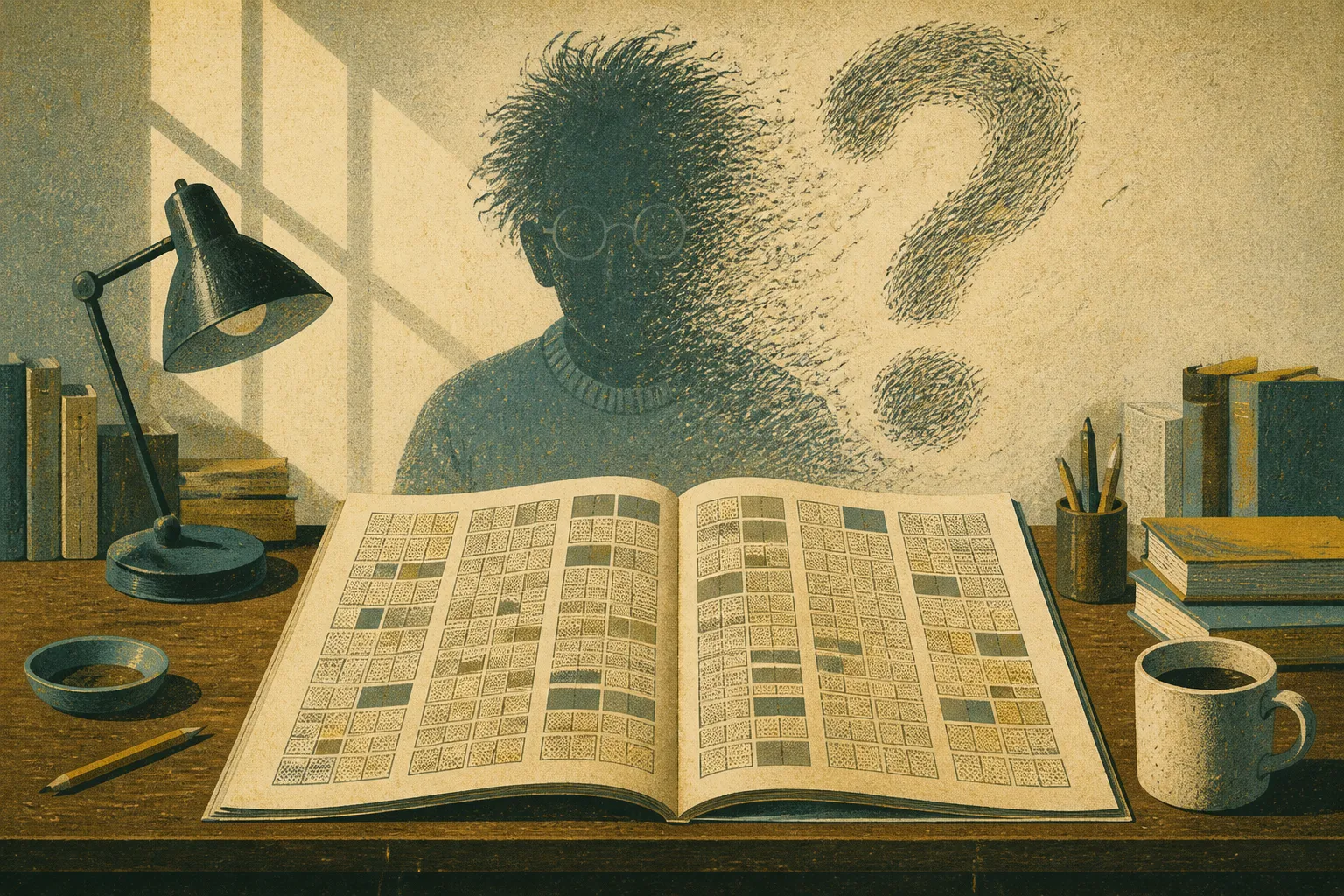
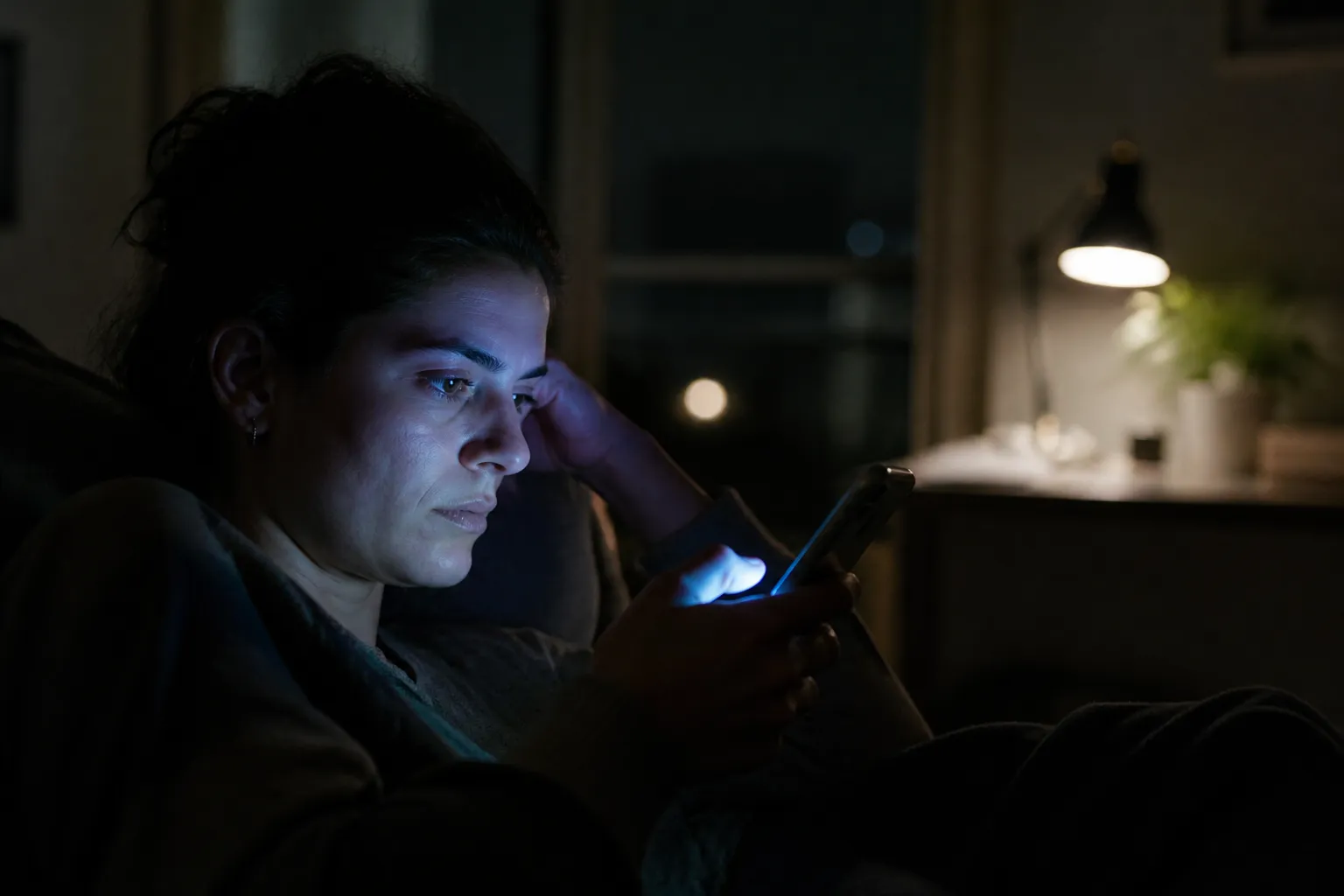
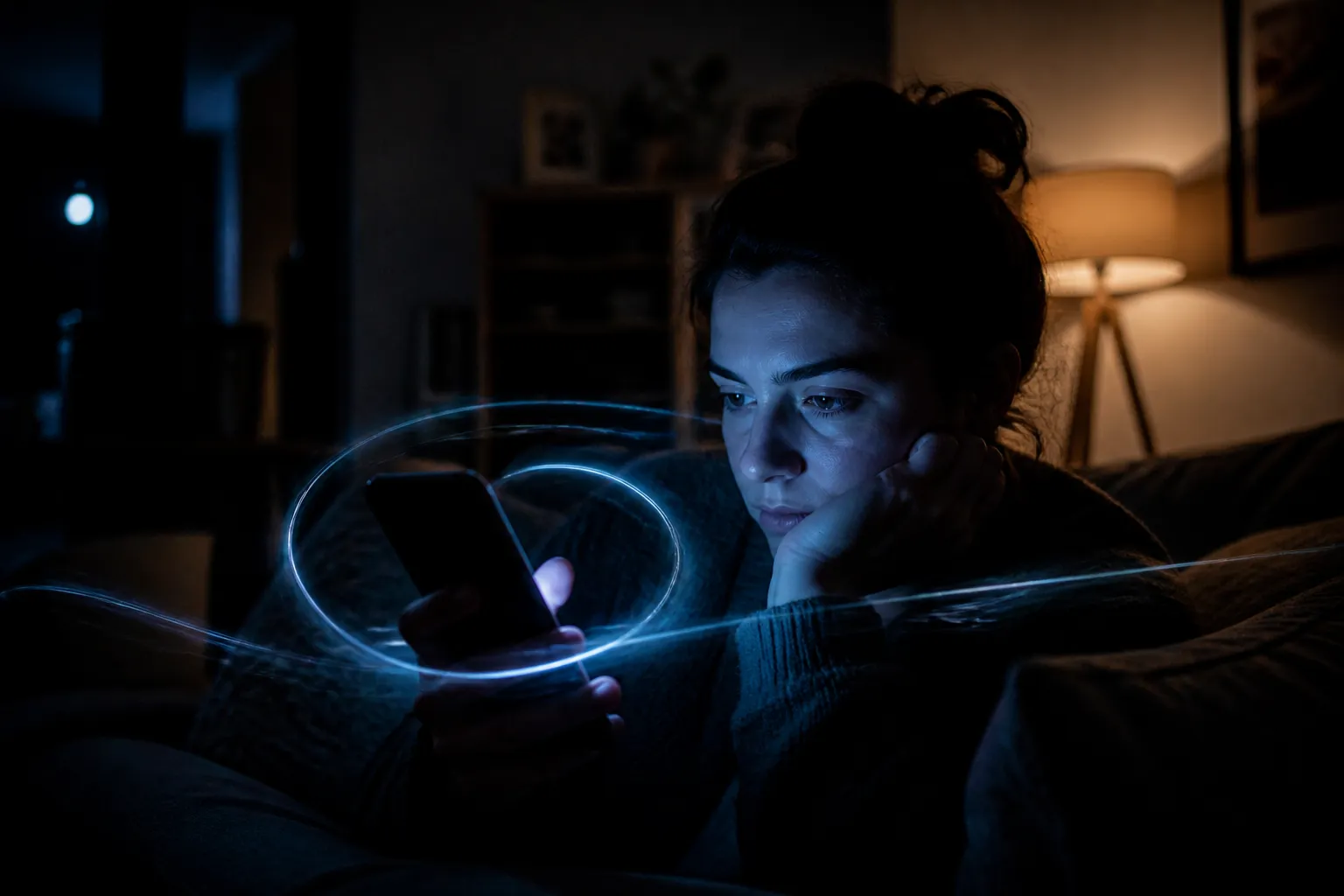
You open your phone to check one thing. Twenty minutes later you are still reading about a crisis you cannot change. Most people know the feeling. This piece looks at why that loop is so sticky, what the sources do and do not show about the role of algorithms, and how to test your own habit.
Why bad news holds on
Doomscrolling means endlessly consuming news and content that heightens anxiety, sadness or anger. The word came into common use in 2020 and was added to the dictionary in 2023, according to a UC San Diego explainer. That piece offers one proposed explanation: a negativity bias, an evolutionary trait that pulls attention toward threats. On that account, bad news holds us harder than good news.
The same article gives psychiatrist Susan Tapert's description of the body side. In her account, the amygdala sends stress signals that urge us to keep scanning for danger. Then dopamine, released when we find new information, reinforces the habit. The result is a cycle of seeking, anxiety and small reward. This is one expert's account, not a measured result. Each fresh headline can feel like protection, even when it gives you nothing to do.
Algorithms: driver or mirror?
Platforms are built to keep you looking. A clinical practice blog from ACP says algorithms maximize engagement by showing users what they are most likely to interact with. It adds that emotionally charged posts, especially negative or sensational ones, tend to be amplified. Infinite scroll and constant notifications add more pull to check again.
That sounds like a clear case against the feed. The research is less tidy. A paper on social drivers and algorithmic mechanisms, published in PMC, describes a feedback loop in which algorithms and existing social drivers reinforce each other. That makes it hard to pull the two apart. Its authors say the evidence on well-being is far from straightforward and that substantial further research is needed. They also say the existing evidence suggests algorithms mostly reinforce existing social drivers rather than create them from nothing. So the mirror view has real support, though it is not the final word.
A 2025 review in Cureus goes further. According to its summary, it argues that algorithms are designed to capture attention and that frequent use alters dopamine pathways in ways it compares to substance dependency. That is the authors' argument and a comparison, not a diagnosis. The excerpt available here is cut off, so sample sizes and specific findings are not visible.
Misaligned goals and the curated feed
A separate 2025 paper on functional misalignment on digital platforms offers a useful frame. It says the harms come from a gap between what algorithms optimize and what people actually want. The systems optimize predictable behavior, captured as clicks, views and engagement. People want to be informed, connected or calm. The paper names three mechanisms: a bias toward fast, reactive signals over reflective judgment, feedback loops that couple user behavior with algorithmic learning, and collective effects that amplify both at scale.
Curated feeds add a second pressure. Peers post achievements and highlight reels, and the ACP blog says this can foster envy and lower self-esteem. It also says teens and young adults are singled out as especially affected. Fear of missing out fits the same pattern. You see the best moments of many people at once, and it is easy to mistake that sample for ordinary life. The sources do not say how this varies by age or personal history, so treat broad claims with care.
A self-check you can actually use
The sources do not offer practical steps for reducing doomscrolling beyond general descriptions, and they say little about what any platform has changed. So what follows is a reasoning aid, not medical advice and not a finding from the research. If your scrolling worries you, a doctor or counselor is the right person to ask.
Start by separating correlation from cause. Feeling worse after scrolling does not tell you whether the feed made you anxious or whether anxiety sent you to the feed. The sources cannot settle that for the population, and they cannot settle it for you either. You can only watch your own pattern. Try these questions after your next session:
- Did I learn something I can act on, or only something I can worry about?
- Did I open the app for a reason, or did my thumb get there first?
- How did I feel before I started, compared with now?
- Could I name what I read ten minutes later?
One check will not prove anything. A week of honest answers might show you a pattern. If most answers point to tension without information, that is useful to know, whatever the algorithm is doing.
What we still do not know
Several questions stay open. The sources do not say how much harm comes from algorithms and how much from existing human tendencies. They do not say whether the negativity bias works the same way across ages and individuals. They also leave open whether social media has deepened political division or widened access to diverse views. Some excerpts are truncated, including a teen daily-use figure in the 2025 paper. Until better evidence arrives, the careful position is the plain one: the pull is real, its source is mixed, and your own habits are the part you can observe.
Sources
- Social Media Algorithms and Mental Health | ACP
- Doomscrolling Again? Expert Explains Why We’re Wired for Worry
- Social Media Algorithms and Teen Addiction: Neurophysiological Impact and Ethical Considerations - PMC
- The Effects of Social Feedback Through the “Like” Feature on Brain Activity: A Systematic Review - PMC
- Social Drivers and Algorithmic Mechanisms on Digital Media - PMC
- Functional Misalignment in Human–AI Interactions on Digital Platforms
- The Feed That Shapes Us: Extremism and Adolescence in the Age of Algorithms – GNET
- The Role of Social Media Algorithms in Shaping Political Polarisation in the United States
Siobhan O'Reilly investigates the friction between urban decay and digital expansion for Deeperpectives. She spent a decade reporting from transit hubs and temporary settlements across the rust belt. Her work prioritizes the raw data of lived experience over polished corporate narratives.