Ask a room of people whether they are more biased than the average person in it, and the room will go quiet in a particular way. Nobody says yes. In one large study, of 661 participants, exactly one did. That lone honest answer is the most interesting number in the research, and the rest of the data explains why it was so lonely.
What the bias blind spot is
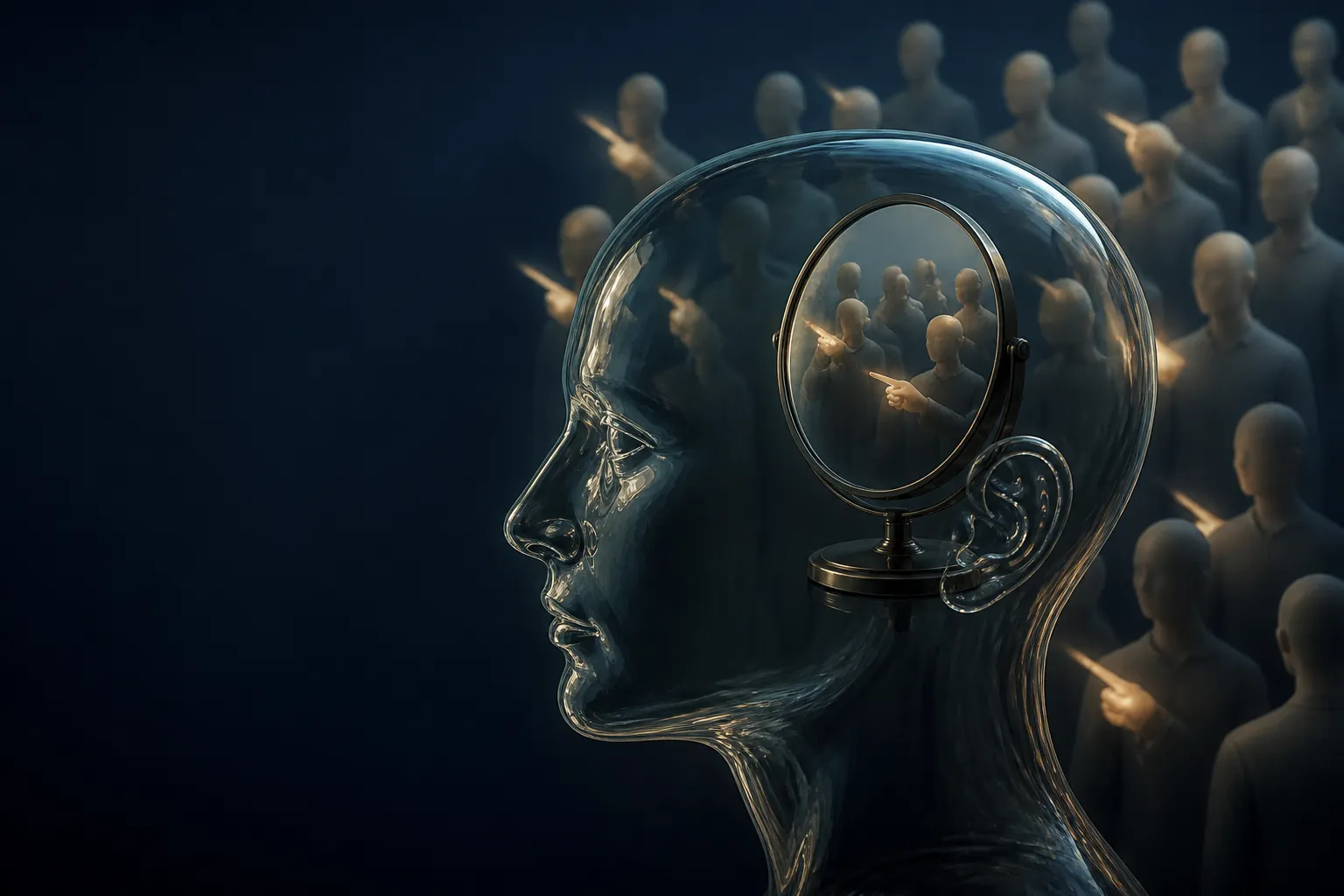
The bias blind spot is the tendency to recognize cognitive biases in other people while failing to see how the same biases shape your own thinking. Researchers describe it as being less likely to detect bias in yourself than in others. The idea predates the study that measured it, so that work built on an existing observation rather than inventing one.
The comparison people reach for is the blind spot on a car. A factor you consistently overlook, usually without meaning to, can steer your choices while you stay unaware of it. Because the influence cannot be seen from the inside, it can distort judgment and lead to decisions that range from mildly off to plainly regrettable. Explore Psychology lays out the basic definition.
The 2015 study and how it measured the gap
A 2015 paper in Management Science came from researchers at Carnegie Mellon University, City University London, Boston University and the University of Colorado, Boulder. They built a tool to measure the blind spot. Carey Morewedge, a Boston University associate professor of marketing and one of the authors, said people seem to have no idea how biased they are. ScienceDaily summarizes the work.
There were five experiments. The first two validated the tool and checked its links to personality and other traits. The last three looked at social comparison, how much weight people give to other people's advice, and whether they were receptive to de-biasing training. The summaries do not explain how the tool was built or scored. Anyone who wants that detail will have to go to the paper itself.

What the numbers showed and what they did not
About 85 percent of participants believed they were less biased than others. That held whether or not their own decisions showed unbiased reasoning. People also varied in how far below average they placed themselves, and that variation did not depend on whether they were in fact biased. The self-rating, in other words, floated free of the behavior it claimed to describe.
The edges of the evidence matter here. The sources do not report what the de-biasing training experiments found, so it is unclear which interventions, if any, shrink the gap. They also do not say whether the pattern holds across cultures or outside the populations studied. A tidy conclusion would be easy to write. The record does not quite support one.
Why intelligence does not protect you
The blind spot turned out to be independent of intelligence, cognitive ability, decision-making ability, self-esteem, self-presentation and general personality traits. Many readers would expect sharper thinkers to catch themselves more often. The study did not find that. Skill at reasoning does not automatically extend to noticing where your own reasoning bends.
The physician example shows how ordinary this is. Doctors may deny that pharmaceutical gifts affect what they prescribe, while agreeing that other physicians are unconsciously swayed by the same gifts. One person holds both views without friction. That asymmetry is the whole phenomenon, in a white coat.
Using the findings in your own decisions
The useful reframing is that the tendency applies to everyone. The practical question stops being whether you are immune and becomes how you might detect bias in your own judgments. Treating yourself as the exception is the very error the research describes.
Two questions follow from the evidence. Would I accept this reasoning from a peer with the same incentives? The physician example suggests the answer often changes when the subject changes. And do I rate myself as less biased than my peers, and what is that rating based on? Since the belief was common regardless of actual bias, holding it is itself a small warning. So is trusting that intelligence will cover for you, because those traits were unrelated to the blind spot.
One caution. The sources offer no tested method for reducing your own blind spot beyond general awareness. These questions are prompts for self-scrutiny, not proven corrections. That seems a fair place to leave them.
Sources
Marcus Adeyemi-Holt is a house writer for Deeperpectives, where he examines how ordinary routines reveal larger patterns in work, memory, and place. He draws on years of reporting on municipal records and oral histories to trace the quiet forces that shape everyday life.