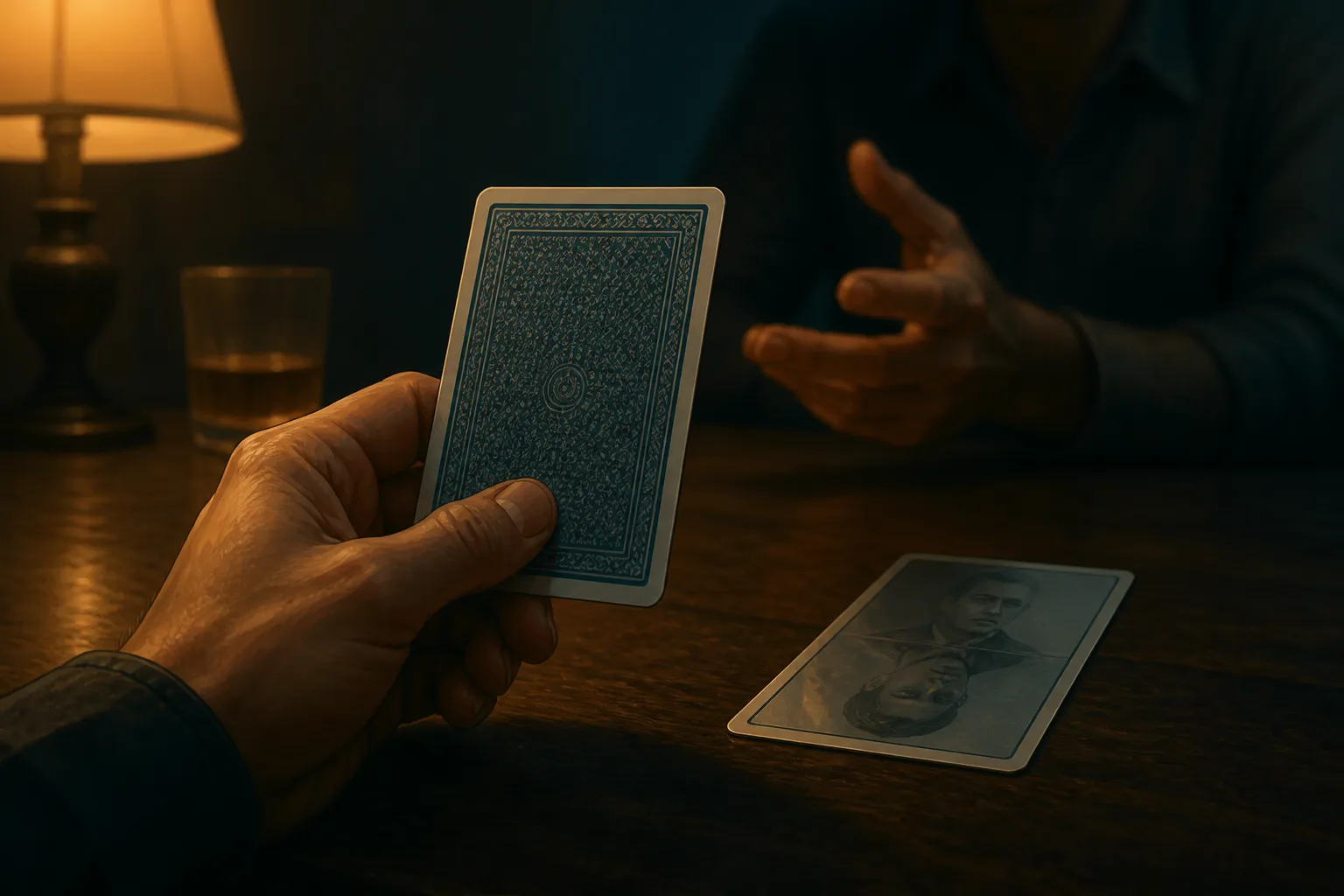
A card rests in your hand. Across the table, someone asks why you chose this face. You look again, find a detail you like, and explain yourself. The explanation feels familiar because it is yours. In a choice blindness experiment, though, the card may show the face you rejected. The striking part is not only that the switch can go unnoticed. It is that a person may then give a confident account of a choice they never made.
What choice blindness names
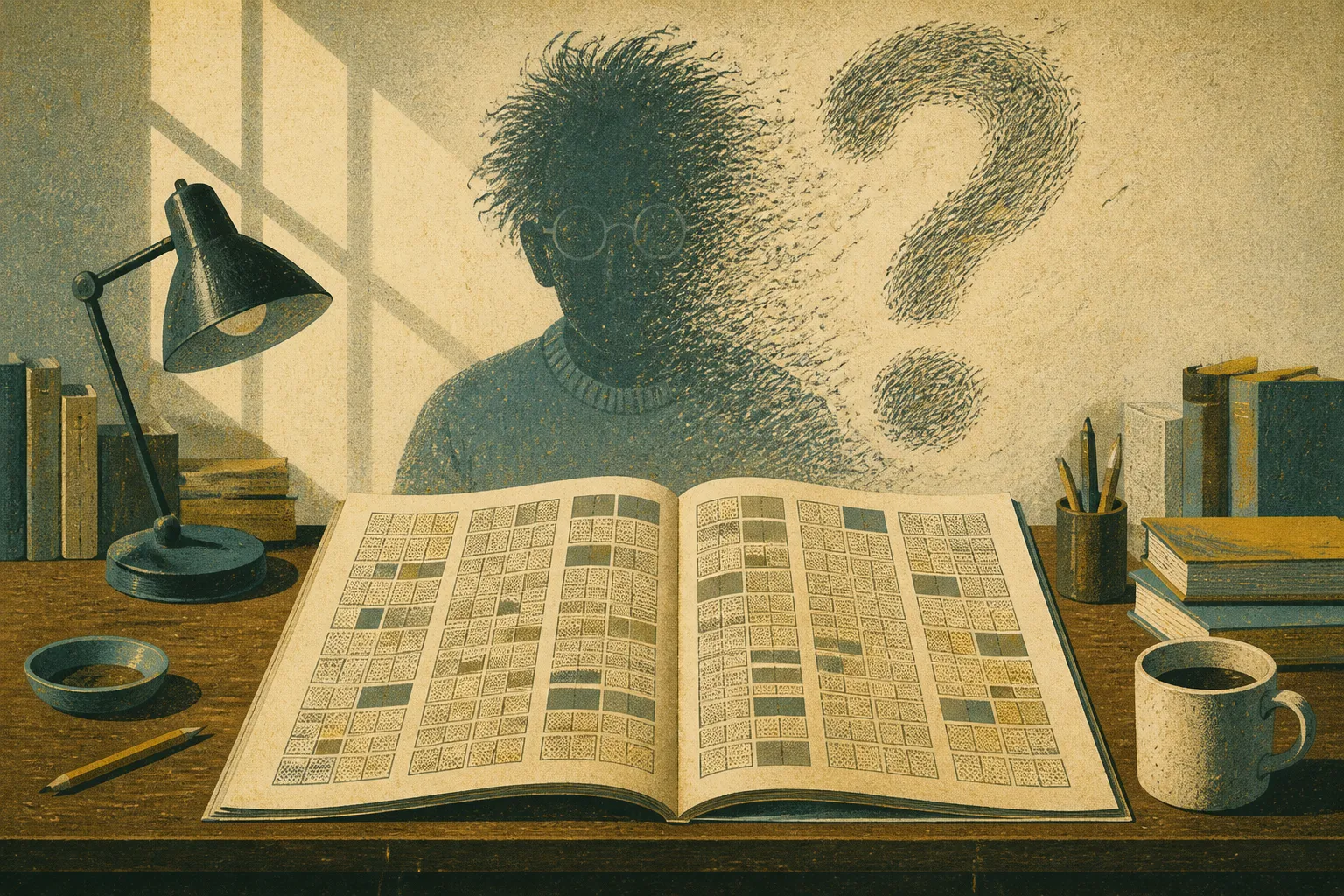
Petter Johansson and Lars Hall, researchers at Sweden’s Lund University, coined the term “choice blindness” for this gap between a choice and a person’s awareness of it. Their work grew out of research on change blindness, the failure to notice a change happening in plain view. In both cases, attention does not register something that seems, afterward, as though it should have been obvious.
Johansson’s larger claim is about how well we know the reasons behind our own decisions. People may be “less aware of the reasons for our choices than we think we are,” he says, with some reasoning arriving after the choice rather than before it. That does not mean people are knowingly lying. A sincere account can form around an option that was never selected.
The finding has been reported beyond judgments about faces. Follow-up experiments described by Johansson found similar effects for taste, smell, consumer choice, and other opinions. The range is suggestive, but the available account does not provide detailed methods or results for each follow-up. The faces experiment offers the clearest view of the basic maneuver.
The face on the card
In the original design, participants looked at pairs of faces printed on cards and chose the person they found more attractive. A researcher handed them the card they had selected and asked them to explain their choice. The question invites a familiar kind of answer: a comment on a smile, a look, or some quality that makes one face preferable.
On some trials, a sleight of hand meant the participant received the card they had rejected. The researcher then asked why they had chosen that face. The experiment depended on whether the person noticed the mismatch between the earlier choice and the card now in hand. According to the reported figures, only 25 to 30 percent detected the switch, even when the faces were drastically dissimilar and participants could inspect them for as long as they liked.
Those who missed the switch often went on to explain the face they had not picked. A detail could become a reason; a preference could acquire a history. The account did not need to feel false to be built after the fact. That is the quiet hinge in the study: the question asks for a memory of choosing, but a plausible explanation can arrive in the memory’s place.

The result can sound like a parlor trick, but its force comes from the ordinary exchange around it. No one announces that a test is underway. The participant is simply asked to say why. In the gap between hand and explanation, the switched card becomes the apparent record of a decision.
From faces to jam
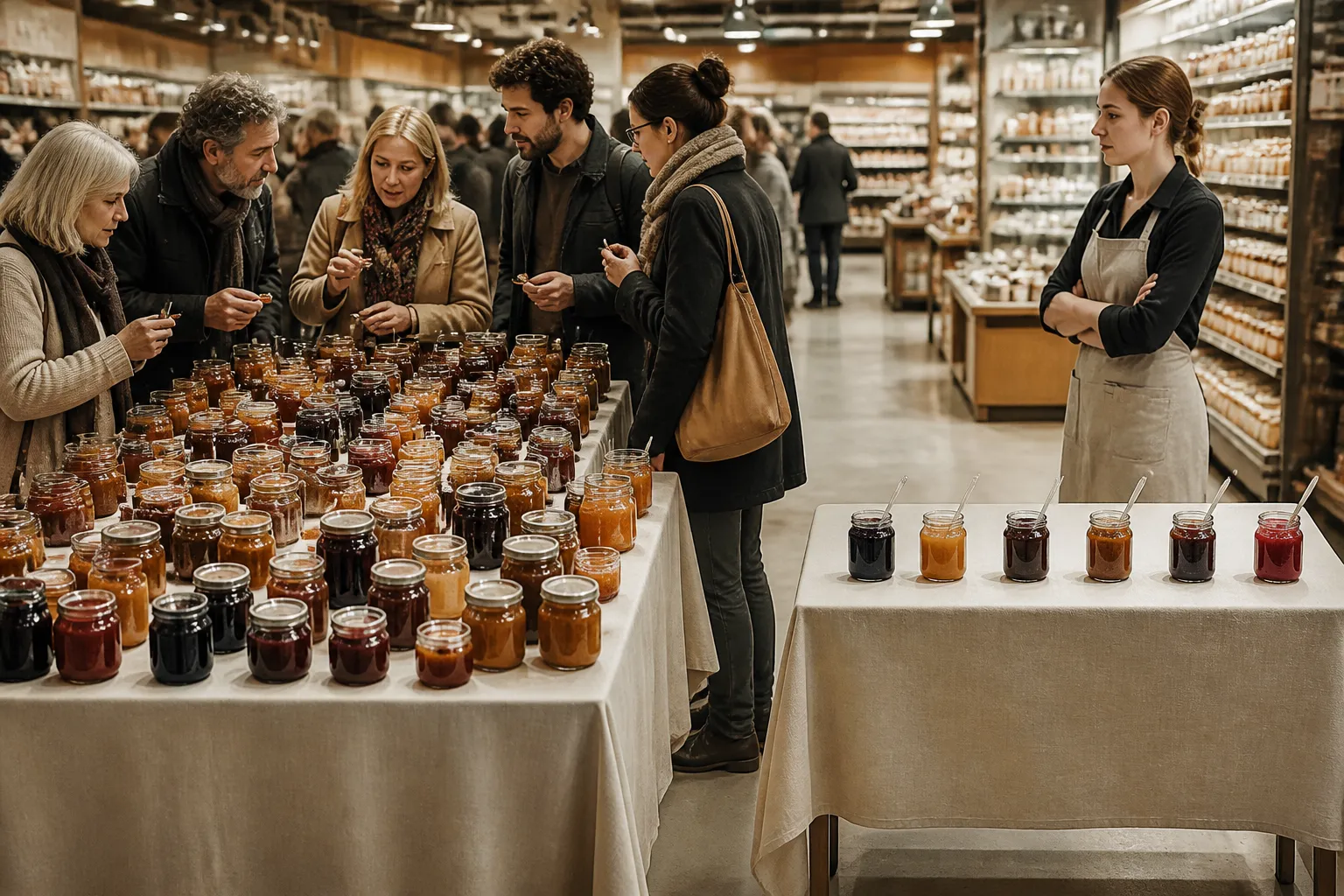
A supermarket tasting station brought the same broad question to food. People sampled jam and made a choice; after a switch, some were asked to explain why they preferred the jam they had not selected. The reported descriptions say they offered similar kinds of elaborate explanations for the switched option. Taste is different from looking at a face, but the structure of the exchange remains: a choice, an unnoticed substitution, and a request for reasons.
Johansson connects choice blindness to inattentional bias, the failure to notice an unexpected event while attention is occupied elsewhere. The familiar example is a video in which viewers count basketball passes and may miss a person in a gorilla suit crossing the scene. The surprise is not that the unexpected thing is invisible. It is that attention has been given another job, and the mind can leave the anomaly unrecorded.
The comparison helps explain how a switch might escape notice, but it does not settle what happens in every setting. The available source gives no exact sample sizes, statistical details, or replication results for the jam study and other follow-ups. Its reported pattern is worth considering, while its specific figures should not be mistaken for universal benchmarks. Johansson’s interview and account describe the examples; the primary 2006 paper is available here.
What an explanation can and cannot show
One reading of the experiments is a warning about introspection. If people can explain a choice they did not make, then a person’s report of why they decided something may not be a transparent record of the causes. We may have access to the story we can tell, without full access to the process that produced the preference.
A more measured reading leaves room for the usefulness of explanation. People routinely make sense of their actions after the moment has passed. The experiment shows that a plausible story can be built around an option that was not chosen; it does not show that every explanation is invented, or that people never know why they prefer one thing to another. Both readings fit the reported result, and the available sources do not resolve the balance between them.
That distinction matters. “I can give a reason” and “this reason caused my choice” are different claims, even when they sound identical in conversation. A person might sincerely point to a feature of the jam or face, while the experiment leaves open whether that feature guided the initial selection. The explanation is evidence of what the person can notice and say now, not necessarily a complete archive of the earlier decision.
The limits of the card
The studies described here do not tell us how choice blindness applies to hiring, voting, or a purchase made under different conditions. Nor do they offer a method for readers to guard against it. It would be tempting to turn the experiments into a rule about all consequential decisions, but the reported evidence does not establish that leap.
The sources also do not identify what makes someone more likely to detect a switch beyond the reported face-study figures. A careful account should leave that question open. The card in the experiment is a small object with a large task: it asks us to separate what we chose, what we noticed, and what we can explain afterward. Sometimes those records line up. Sometimes a confident reason is the first record we have.
Sources
- Petter Johansson on Choice Blindness – Social Science Space
- https://www.lucs.lu.se/fileadmin/user_upload/lucs/2011/01/Johansson-et-al.-2006-How-Something-Can-Be-Said-About-Telling-More-Than-We-Can-Know.pdf
- Lifting the Veil of Morality: Choice Blindness and Attitude Reversals on a Self-Transforming Survey - Lund University
- Choice Blindness: Do You Notice If You Get What You Choose? | Psychology Today
- When Free Choice Is an Illusion | Scientific American
- Lifting the Veil of Morality: Choice Blindness and Attitude Reversals on a Self-Transforming Survey | PLOS One
An exceptional writer at Deeperpectives, she covers public memory, family archives, and the histories held in ordinary objects. Before joining the desk, she cataloged oral histories for a neighborhood museum, where she learned to treat a small detail as a door, not a conclusion.