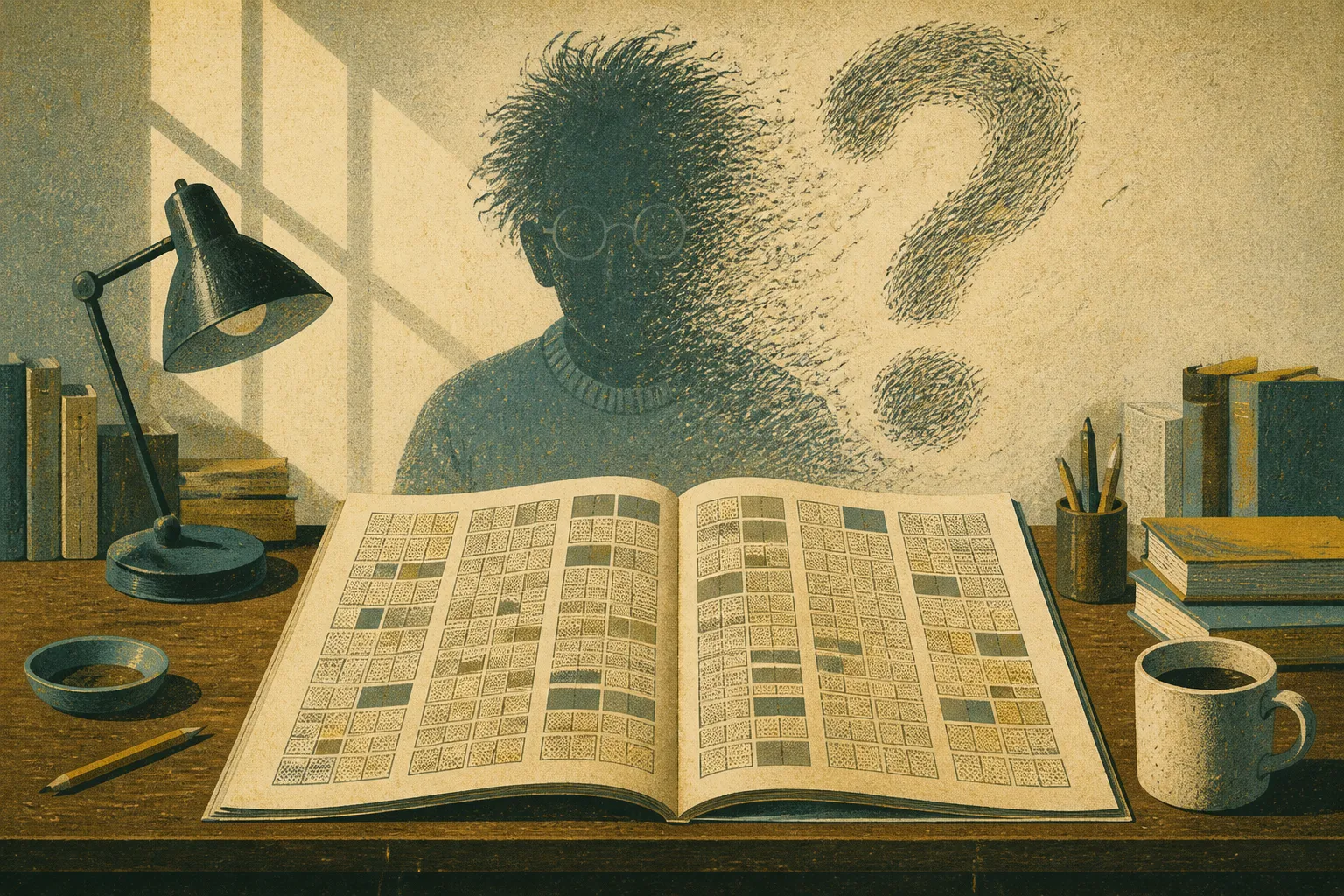

A correction can land and still fail to finish the job. A person reads the retraction, nods, and then reasons as if the original claim were partly true. Researchers have a name for this, and it matters for anyone who writes, edits, or simply reads the news.
What the Continued Influence Effect Actually Is
The continued influence effect is reliance on misinformation in reasoning after a correction has been received and accepted. The person does not necessarily doubt the correction. The false claim still shapes their judgments and decisions. A 2022 review in Nature Reviews Psychology, published on 12 January of that year, lays out this effect alongside the psychological drivers of misinformation belief and the barriers to revising it [1]. It is an older source than the other material here, so read it as a foundation and not as the newest word.
One related term helps. Belief updating means revising a belief when new information arrives. The term itself says nothing about whether the revision is accurate or biased [2]. That distinction is useful, because a belief can change in the wrong direction or by the wrong amount and still count as updating.

Why Corrections Struggle
The 2022 review groups the causes into cognitive, social, and affective factors. These lead people to form or endorse misinformed views, and they also create barriers to knowledge revision after a correction [1]. In plain terms, the same claim can stick for different reasons in different people. One person may trust the source. Another may feel the claim fits what they already fear. A third may belong to a group where repeating it is normal.
The fact sheet behind this piece does not say how much each factor contributes, and it does not rank them. I would be wary of any tidy story that does. What the review supports is narrower: correction is not a single event, and the surrounding psychology can work against it.
A separate National Academies consensus study from 2025 adds a caution about scale. It finds that misinformation about science is not equally consequential, and that its effects differ across individuals and communities [3]. Some false claims do real damage. Others barely matter to the people who hold them.
Reminders, Prebunking, and Debunking
The review describes two broad families of response. Prebunking is pre-emptive: it tries to prepare people before they meet a false claim. Debunking is reactive: it corrects after the claim is already out [1]. Describing prebunking as a kind of vaccine is a metaphor, and the sources here do not test that comparison.
The case for prebunking is simple. If a correction struggles to fully displace a belief, it may be better to act before the belief forms. The case for debunking is just as simple. Many false claims cannot be anticipated, so corrections will always be needed after the fact.
Newer work adds a third tool, the reminder. In one line of research, a reminder is a veracity-labeled statement that repeats the earlier false information, placed before the true correction. That setup can mitigate the unwanted effects of misinformation on beliefs and memories [7]. Eye-tracking work suggests that attention while people encode the corrective details plays a part in the benefit. A related study compared complete and partial reminders of fake news and their effects on memory and belief updating [8].
None of this crowns a winner. The sources give no effect sizes for how much reminders or prebunking reduce belief in misinformation, so the size of any benefit is unclear. They also do not say which correction formats work best for general readers outside the study populations.
Belief Is Not the Same as Behavior
Here is a point that is easy to miss. Even a stubborn false belief may not drive what a person does. One review of the belief-to-behavior process finds that belief in misinformation is often modest, variable, and context-dependent in its link to behavior, and that the association is not reliable [6].
The same review names three conditions under which a belief tends to shape action. The belief is linked to a behavioral goal. The inferential path from belief to behavior is short. And the belief-behavior association is preserved in memory. Someone who believes a rumor about a product and is standing in the store aisle meets all three. Someone who holds a vague false notion about a distant event meets few of them.
This framework also asks a practical question before any intervention: is the goal belief accuracy or behavioral impact? The answer changes which tool makes sense [6].
Questions Worth Asking, and What Is Still Missing
The sources do not offer a personal survival manual, but they do suggest sensible questions. Treat them as prompts drawn from the research, not as proven rules.
- Does the belief connect to a behavior the person actually wants to change? [6]
- How reliable is the new information, and what does it say about one's own situation? A population average and an individual risk estimate are different things [2].
- Is the revision biased, or does the task or analysis itself create the apparent bias? [2]
Two red flags follow. Do not assume that combating misinformation reliably changes behavior, since the link is often modest. And do not treat a correction as fully erasing an earlier false belief, because influence can persist after the correction [1].
The gaps are real. The sources do not measure how fast a belief fades or whether it ever disappears, so the idea of a fading signal stays a reasonable reading, not a tested result. They also do not explain how to spot the three belief-behavior conditions in everyday decisions. Citation counts, like the 1,229 Scopus citations for the 2022 review, show attention and not correctness. The honest summary is modest: corrections help, they rarely finish the work alone, and we lack the numbers to say by how much.
Sources
- The psychological drivers of misinformation belief and its resistance to correction - University of Bristol
- Belief updating Definition and Examples | The Behavioral Scientist
- Read "Understanding and Addressing Misinformation About Science" at NAP.edu
- Understanding and Addressing Misinformation about Science
- Science and Engineering Education and Workforce Program Area
- Changing beliefs or changing behavior? Understanding the belief-to-behavior process and intervening to curb the impact of misinformation - PMC
- Misinformation reminders enhance belief updating and memory for corrections: the role of attention during encoding revealed by eye tracking - PMC
- Memory and belief updating following complete and partial reminders of fake news - PMC
Siobhan O'Reilly investigates the friction between urban decay and digital expansion for Deeperpectives. She spent a decade reporting from transit hubs and temporary settlements across the rust belt. Her work prioritizes the raw data of lived experience over polished corporate narratives.