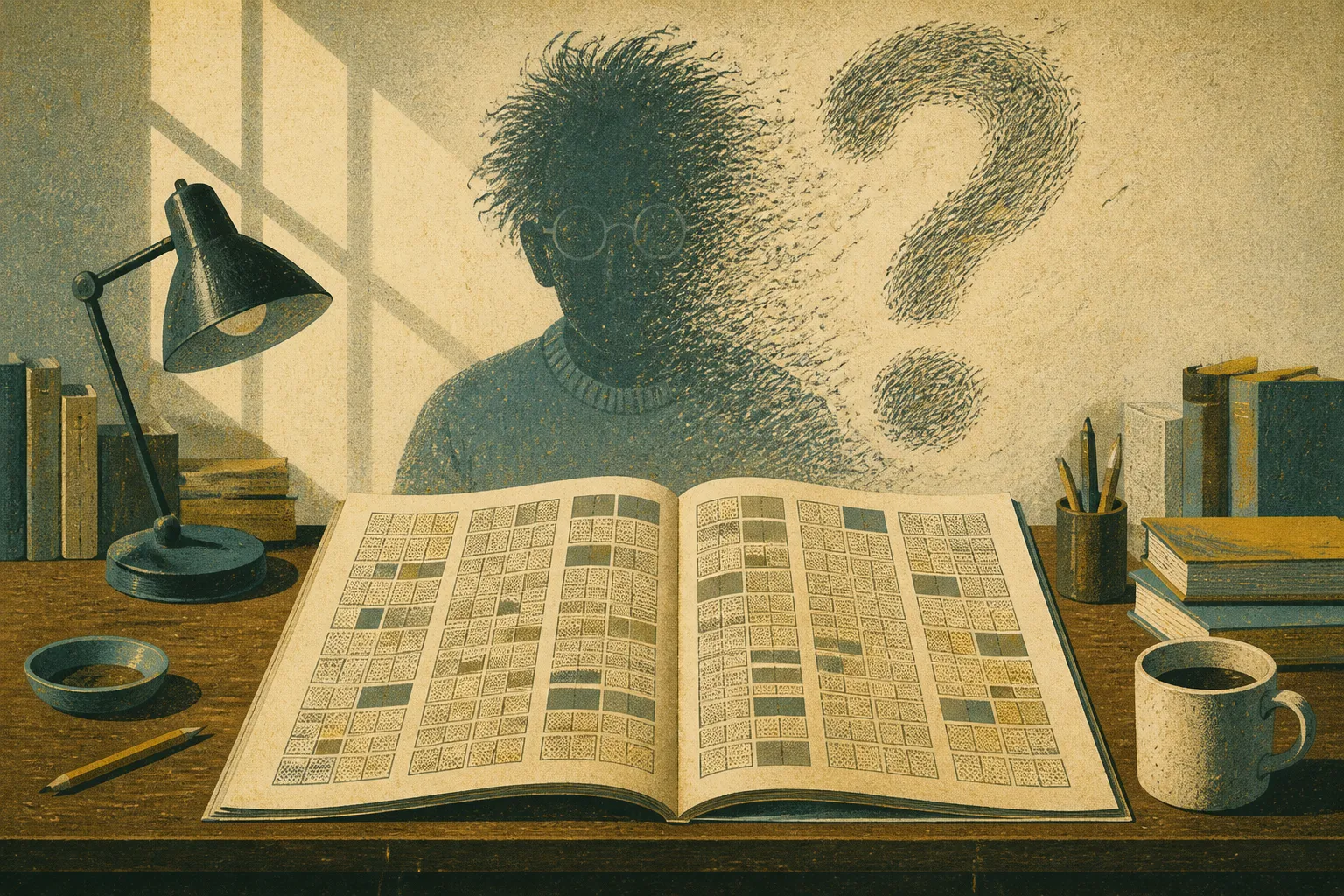
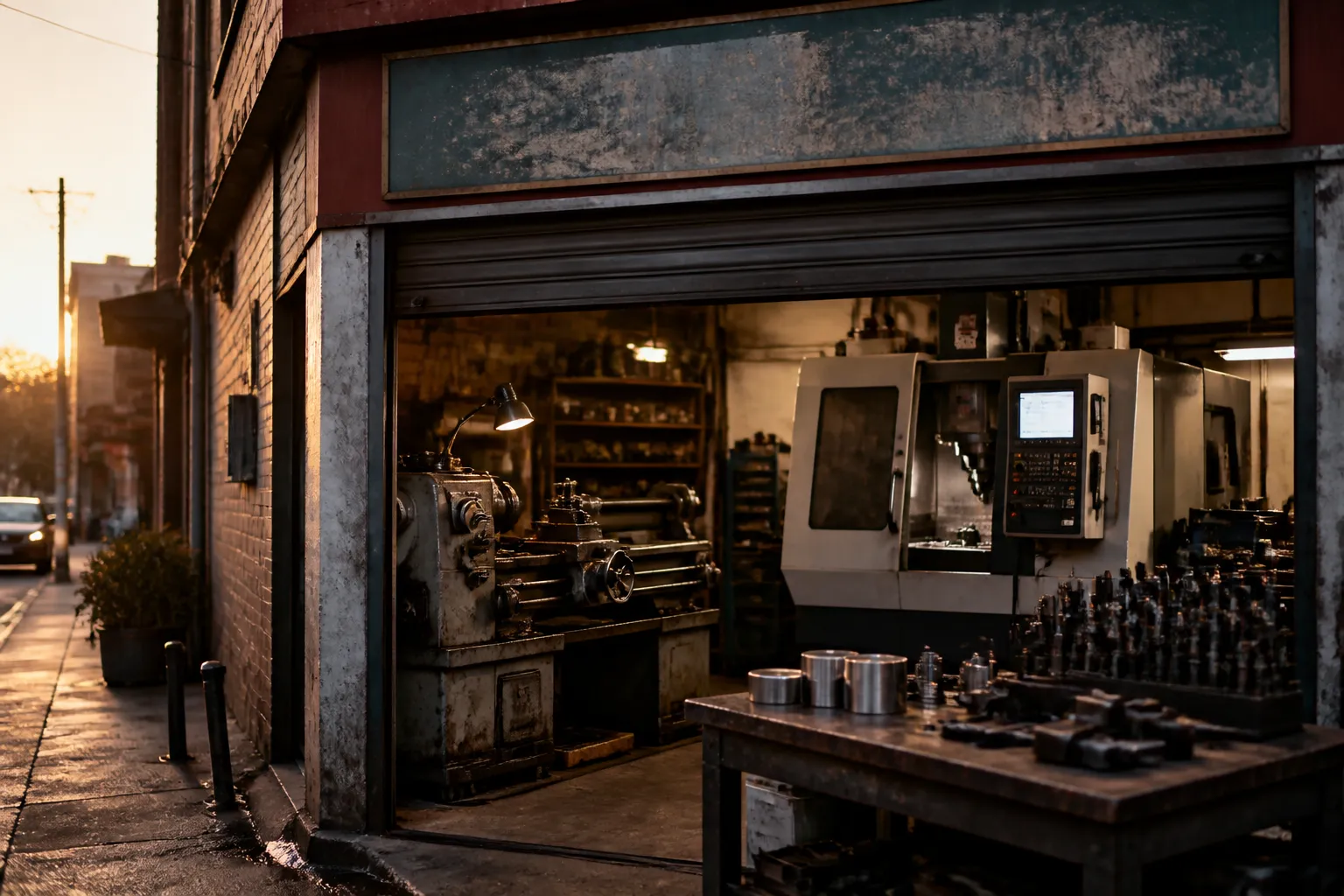
A small machine shop has been running on the same corner for sixty years. The lathes were replaced in the nineties. The founder's son retired, and so did the foreman he trained. The firm now makes parts the founder never drew. The sign above the door still carries the original name, and the delivery drivers still call it "the old place." Is it the same business?
The puzzle, restated for a business
The old puzzle is about a ship. Replace its planks one at a time and ask whether it is still the ship that Theseus sailed. Plutarch passed the question along, and later thinkers added a twist. If someone gathers the discarded planks and rebuilds them into a second vessel, which one is the real ship?
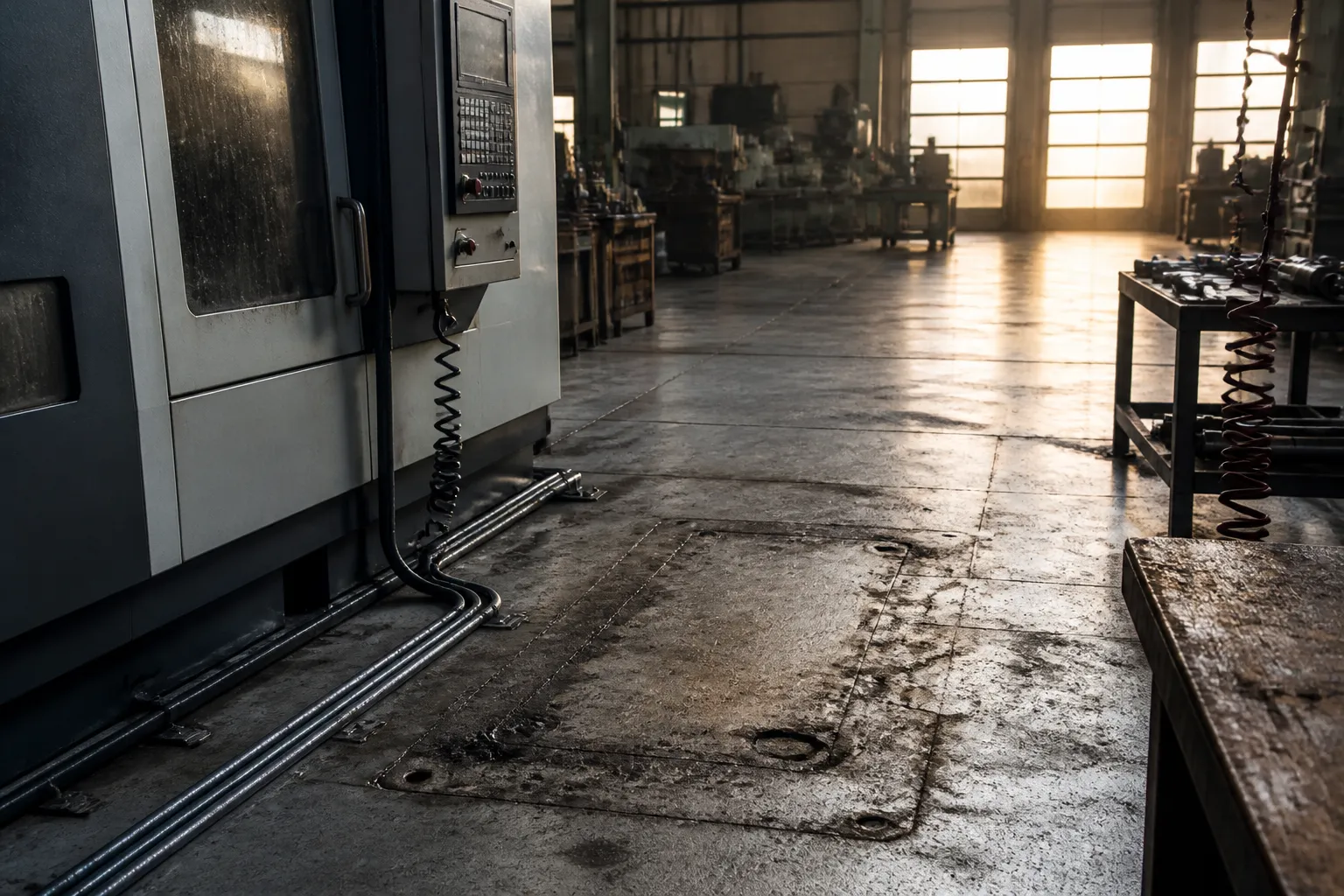
On a shop floor the planks are lathes, welders, clerks, suppliers and product designs. Nobody replaces them on a single day. A bearing wears out, a hire retires, a catalogue loses a line. Each change is small and sensible. The question only becomes strange when you add up sixty years of them. That gradualness is the whole difficulty, because our sense of what persists is built from tiny steps, none of which feels like an ending.
Competing views on what makes something the same
The first view says identity follows material. If enough of the original stuff remains, the thing remains. A firm that still works on its original floor with its original machines looks more clearly the same than one that moved and rebuilt everything. The trouble is the threshold. Nobody can say which machine, replaced in which year, ended the old company.
The second view says identity follows form or function. The business is the same if it still does the same kind of work, in the same organized way, in the same place in its market. Swap every machine and keep making the same product by the same process, and you have the same firm. The objection is that form can shift a great deal while we still say it is the same firm. A company that moves from typewriters to electronics is a hard case for this rule, and function alone may be too loose.
The third view follows history and relations. The business persists because there is an unbroken chain of contracts, customers, reputation and legal standing that can be traced back. This explains why we say a company is "the same" after huge change. We are tracking the relationships, not the parts. Critics note that relationships can be sold or lost, so this view owes us an account of what counts as unbroken.
Why people's answers differ
Much of the disagreement comes from the purpose behind the question. A supplier asking whether it is dealing with the same customer cares about payment history and signatures. An investor cares about what the firm owns and earns. A customer cares whether the part still fits. Each is answering a different version of "same." The puzzle looks unsolvable mostly when those purposes get blurred together.
Habit matters too. People treat names, logos and familiar faces as anchors. A rebrand can feel like a new company when nothing operational has changed. A famous name can seem untouched after every original employee has gone. A useful check is to ask what specific feature the judgment rests on, and whether that feature has in fact survived.
How to reason about a specific case
List the candidate criteria separately: physical assets, people, products, legal entity, customers and name. Then ask which of them the speaker's claim depends on. Someone who says the business is the same should be able to say which criteria they mean. Split this way, the disagreement usually shows its real location, even when the large question stays open.
It also helps to set the threshold in advance. A firm weighing a reorganization can decide before the change what would count as becoming a new company. That prevents anyone from redefining the answer afterward to suit the outcome they prefer.
Limits of this discussion
The source material here does not reach either the philosophy or the business question. The available references were an IRS bulletin index that offered only navigation text, and two NLRB guides, a basic guide and a hearing officer's guide, whose text could not be read. So nothing here can be said about how labor or tax rules treat a continuing business after staff or ownership changes. That would need checking against primary legal texts, and this piece offers no legal or tax advice.
What remains is reasoning and general example. Readers who want to test it can read how real firms describe their own continuity in annual reports and company histories, and notice which criterion each one leans on. The sign over the door tends to say a lot about what the firm hopes you will count.
Sources
- Internal Revenue Bulletin: 2025-10 | Internal Revenue Service
- https://vertexaisearch.cloud.google.com/grounding-api-redirect/AUZIYQGn-kCdB3VbQqtCgtgb-GO2jvrDH7WJUbmTB_frlqpFmoEIaOTZuigiLu_ILPUMdYX3l_7UjAAjnIo3EFgHrdvYLwH7YUt8xZq0NdwK7-4Nr8StgcOOAXoWuFJ2QEhxinjQcaG559kSVVXnLpNWsfqsQEs1yR3-ZbKJzAlA9YpyDbMMs5d0-nTIbkutub9L
- https://vertexaisearch.cloud.google.com/grounding-api-redirect/AUZIYQFRD0SKppPMgKnymkiiBihy-4Yuu7hN7h3llh2jZ9i33BZtmUodObW6hVaVHH1HewjIslbw-Oo3_nat4kBIVkEphqr4vJEOOzOL6Xo0yMFkhFpHS20FZEcQoQcpq8I1pXnPvKD7l-DM4pb_qjdi5Pyepd6AMnEh1rnjTnYjqFS2mCB2nlF2S5yNKOkuqopd-abHbg==
Marcus Adeyemi-Holt is a house writer for Deeperpectives, where he examines how ordinary routines reveal larger patterns in work, memory, and place. He draws on years of reporting on municipal records and oral histories to trace the quiet forces that shape everyday life.