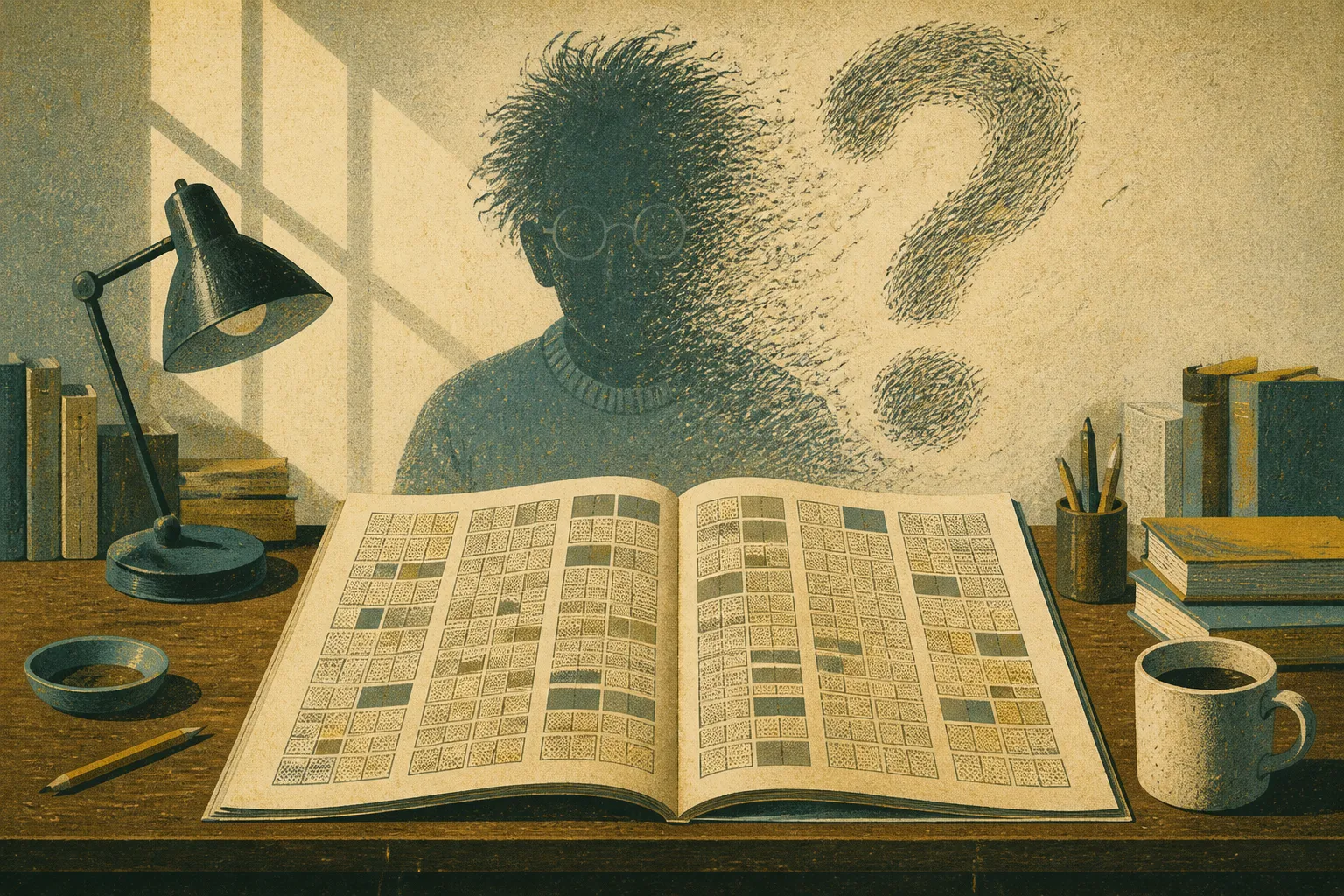

The note is only six words: “Can you send this today?” No greeting, no explanation, no soft landing. Read it on a calm afternoon and it may seem efficient. Read it after a tense meeting and it can sound like a reprimand. In the blank space around the sentence, a reader can start sketching a person: impatient, rude, always like this.

That sketch may be wrong. The sender could be writing between appointments, answering from a phone, or trying to meet a deadline that neither person has discussed. The message is visible; the pressures behind it are not. Still, the mind often supplies a character before it supplies a circumstance.
Psychologists call this tendency the fundamental attribution error: when explaining another person’s behavior, we can give too much weight to disposition and too little to the situation. It is a tendency, not a law. We notice context all the time. The trouble is that when context is missing, a personality story can feel like the simplest account of what happened.
The small note is a useful object to keep in view because it has so little in it. Its brevity invites interpretation. The words are evidence of what was written, but not by themselves evidence of the sender’s whole nature.
The sentence becomes a verdict
The jump from action to character is quick. Someone cuts into a conversation, and we decide they are selfish. A colleague misses a meeting, and we call them unreliable. These explanations may turn out to be right. The error lies in treating one act, seen from one angle, as if it revealed the person without remainder.
“Fundamental attribution error” names a recurring imbalance in how we explain behavior. We may focus on the person because the person is right there, while the surrounding conditions remain out of frame. We do not see the earlier email, the delay on the train, or the task that made the meeting feel less urgent to them. What is missing can be easy to forget precisely because it is missing.
That does not mean every unpleasant action deserves an excuse, or that character tells us nothing. It means a first impression is a narrow record. A terse message can be careless, or it can be a hurried message from someone who usually writes warmly. One sentence cannot settle which account is true.
What the observer cannot see
Imagine arriving late to a meeting. In your own account, the bus was delayed, your previous call ran over, and you hurried in as soon as you could. Now imagine a colleague arriving late. You may know none of those details. Their lateness appears as a visible fact, and the cause has to be guessed. The same behavior receives a situational explanation from the person who did it and a character explanation from the person watching.
This contrast is often called the actor-observer difference. It describes a familiar pattern, not a rule that everyone follows in every case. The person acting has access to pressures and intentions that the observer may not know. The observer, meanwhile, sees the action itself. The difference in available information can make two people certain of different stories about the same five minutes.
That certainty matters in a disagreement. One person may think, “I was late because everything ran long.” The other may think, “They do not respect my time.” Each explanation can feel plain and factual from where it is held. The conflict then hardens around a motive neither person has actually checked.
Ask what would change the story
A useful pause is not a demand to think well of everyone. It is a way to keep a first explanation from becoming the only one. Before deciding that a person is rude, ask what circumstances could produce the same behavior without that trait. Before calling someone unreliable, ask whether this is a pattern or a single event you happened to witness.
Then try reversing the positions. If you had sent the brief note, what context would you want the reader to know? If you were late, what explanation would you hope the room considered? This exercise does not prove that the other person had a good reason. It helps make the standard more even: the circumstances you grant yourself are possible for someone else, too.
Finally, look for information that could change your judgment. A direct question may be enough: “I read that as urgent. Is there a deadline I should know about?” Or wait for another example before turning one moment into a stable trait. These are practical checks, not guarantees against bias. The point is to leave the verdict open while relevant facts are still absent.
Keep the record open
A small archive of ordinary life is full of fragments: a message without its earlier thread, a missed appointment without the day around it, a sharp answer whose first question has been forgotten. Fragments are real evidence, but they are incomplete evidence. The careful reader notes what is on the page and what has been supplied by imagination.
The term’s history and the research behind specific techniques deserve a readable source. The only supplied reference is an APA lesson plan on the fundamental attribution error; its text was not available in readable form in the research materials for this piece. For that reason, this account makes no claims about named studies or precise findings. The everyday check remains modest: before a short note becomes a whole personality, ask what the note leaves out.
Sources
- https://vertexaisearch.cloud.google.com/grounding-api-redirect/AUZIYQGn3aqU5hfxk15zWxFiUzJRdOUdgSWixCe6akOO0AFx7FQNfALmZn3OJEooO62vhzrD-WEqaMcsnYgrdlNDiOJsZOjyDlQE3RqIMSctKSZC7Xzl5WWhiOdU3PG-4E-dtoOjt9zWexD2Mxlb-CCU5f9Cor1SHuk66ChxcA6o5BMfeDURC-U9Ls_uEE4g_smNVxzo4g==
- Inflated Applicants: Attribution Errors in Performance Evaluation by Professionals - PMC
- Why Emails Are So Easy to Misunderstand | Applied Social Psychology (ASP) - The Pennsylvania State University
- Fundamental Attribution Error: What It Is & How to Avoid It
- Fundamental Attribution Error - Ethics Unwrapped
- Why You Judge Others Harshly but Excuse Yourself
- The Fundamental Attribution Error at Work: Examples
- Decoding the Fundamental Attribution Error | Psychology Today
An exceptional writer at Deeperpectives, she covers public memory, family archives, and the histories held in ordinary objects. Before joining the desk, she cataloged oral histories for a neighborhood museum, where she learned to treat a small detail as a door, not a conclusion.