
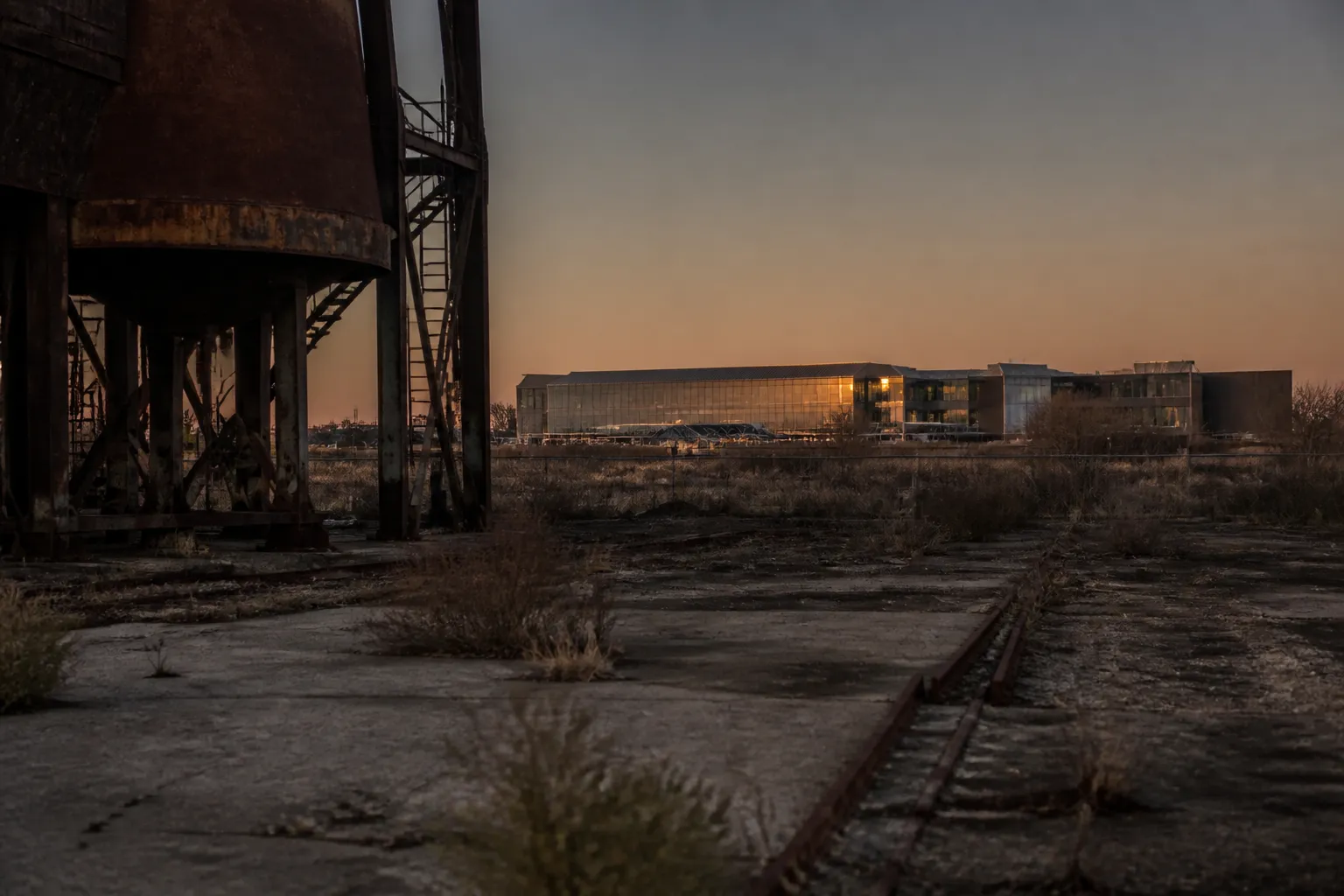
Federal money is moving toward the old industrial heartland, and a tidy story is moving with it. Rust Belt regions, once defined by mills and plants, are being steered toward tech. The story is easy to tell when a region wins. It is harder to tell when no one publishes what happened to everyone else. This piece looks at what the public record shows, and where it goes quiet.
What the Brookings piece actually says
The main source is a Brookings Metro commentary first published in February 2024. It describes a new phase of place-based industrial policy, aimed largely at heartland regions still shifting from an older industrial economy to a tech-driven one. That makes it more than a year old. Programs, designations and counts may have changed since, so check current sources before relying on any figure here.
Two federal programs sit at the center. One is the National Science Foundation's Regional Innovation Engines program. The other is the Commerce Department's Regional Technology and Innovation Hubs program, called Tech Hubs. Brookings says both were funded under the bipartisan CHIPS and Science Act and financed through the FY 2023 omnibus appropriations bill. Proposals named in the piece cover quantum computing, energy storage, smart water systems and sustainable manufacturing materials.
- NSF Regional Innovation Engines: 16 regional finalists named, per Brookings.
- Lead organizations in Fargo, N.D. and Chicago were announced as two winners.
- Brookings added another Tech Hubs designee in a February 12, 2024 update, so counts from that period were still moving.

A selection problem, not a proven bias
Survivorship bias means studying only the cases that succeeded and drawing lessons from them. Our sources do not use the term, and none discuss it. Applying it here is our own framing, not a finding.
Here is the narrower point. Brookings reports that the NSF named 16 finalists, and that eight were in the industrial Midwest while ten fell within a broader heartland geography. Those numbers add up to more than 16, so the two groups must overlap or be drawn on different definitions. The source summary we have does not explain which. Treat the split as a loose description, not a clean count.
What the public narrative foregrounds is the winners, such as Fargo and Chicago. Regions that applied and lost get little attention in the material we reviewed. That is a visibility gap. It does not show that anyone is hiding anything, and nothing in the sources suggests deception. It does mean a reader sees the successes more easily than the full field of applicants.
What the sources leave out
The Brookings excerpt gives no dollar amounts and no individual award sizes. We cannot say how much money flows to any one engine or hub. It also gives no results. Whether these awards have produced jobs, new businesses or lasting tech growth is not answered by anything we have.
Other sources on our list were no help either. Three Cleveland Fed pages, including one titled "Is the Rust Belt's Revival Real?", were captured only as site navigation. Four Bureau of Labor Statistics pages for Ohio, Pennsylvania and the Youngstown area came through the same way. So we have no employment, wage or business-dynamics figures to test the comeback story against. The 1992 date on the Cleveland Fed commentary also suggests it predates these programs entirely.
Critics are missing too. None of our sources includes anyone questioning place-based industrial policy, so we cannot attribute an opposing view to a named person or group.
Two ways to read the policy
What follows is our own reasoning, not sourced argument. A supporter could say that regions with research strength may need a focused push to turn ideas into businesses, and that markets alone may not supply it quickly. Directing money to specific places is the stated approach in the Brookings account.
A skeptic could ask whether money lands where institutions are already strong, and whether similar growth would have happened without it. Any program that selects some places and not others carries that question. It deserves an answer from data, not from either side's instinct.
Questions worth asking
The useful move is to ask for specifics. We did not verify that any particular award page carries these details, and none is in our source list, so start with the program pages at NSF and Commerce and look for what they publish.
- How many regions applied, and how were finalists chosen?
- What is the dollar amount of each award, and over what period?
- What measures of success did each program set at the start?
- Have jobs, firms or wages changed in the funded regions, compared with similar regions that were not funded?
Until those answers are public, the Rust Belt tech story is a plan with a few named winners. It is not yet a record of results.
Sources
- CHIPS and Science Act programs are writing a new story about the Rust Belt | Brookings
- Is the Rust Belt's Revival Real?
- Rust and Renewal: A Cleveland Retrospective
- Rust and Renewal: A Cincinnati Retrospective
- Youngstown-Warren-Boardman, OH-PA Economy at a Glance
- Ohio Economy at a Glance
- Pennsylvania Economy at a Glance
- Business Employment Dynamics in Ohio — Third Quarter 2025 : U.S. Bureau of Labor Statistics
Siobhan O'Reilly investigates the friction between urban decay and digital expansion for Deeperpectives. She spent a decade reporting from transit hubs and temporary settlements across the rust belt. Her work prioritizes the raw data of lived experience over polished corporate narratives.