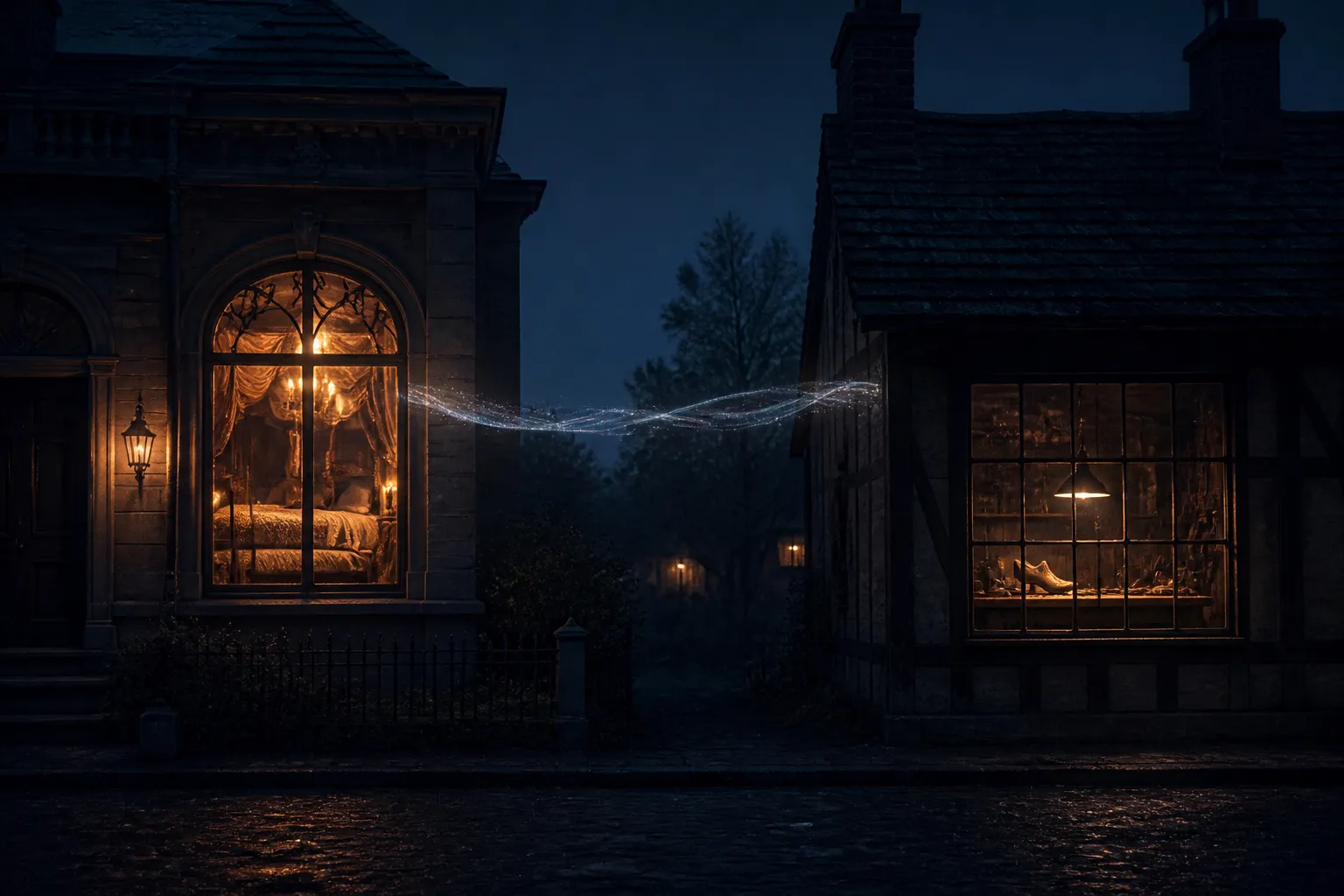
Imagine two houses at the end of a night. In one, a prince sleeps; in the other, a cobbler. By morning, each body is where it was, but the memories have crossed. The man in the cobbler’s clothes remembers the prince’s life. Who woke up? John Locke’s answer turns a small scene of sleeping bodies into a test of what a person is.
- Body: The prince’s organism stayed in the prince’s bed. If a person is the living human being, the prince is still there.
- Memory: The cobbler’s body now carries the prince’s consciousness and recollections. If a person follows remembered experience, the prince woke in the cobbler’s house.

- Soul: A soul might travel independently of the body and memories, though the story gives no visible sign of that transfer.
- Both, or neither: Everyday identity can follow body and biography together, while some traditions doubt there is a permanent self to track at all.
The case begins with ordinary life
Locke was an English philosopher and doctor, born in 1632. He put the prince-and-cobbler case in the second edition of An Essay Concerning Human Understanding, published in 1694, in Book II, chapter 27. The puzzle belongs to a larger question: what makes someone the same self at different times?
Locke had a relatively straightforward rule for an oak or a horse. It remains the same living thing as long as it continues as one organism. But a person raises another question. Is the person simply that living body, or is personhood connected to consciousness and what the individual can remember? The imagined exchange holds the bodies steady and changes the memories, making the competing answers easier to see.
That neatness is also the trick. In ordinary life, bodies and biographies travel together. We recognize a relative by a face, a voice, a manner, and stories they remember. Locke’s story separates those clues, then asks which one should count when they disagree.
Locke follows consciousness
For Locke, personal identity follows consciousness, especially the continuity of memory, rather than bodily continuity. On that account, the man who wakes in the cobbler’s body with the prince’s memories is the prince. He would also be accountable for the prince’s actions. The verdict can feel immediate: if the man remembers being the prince, we may be inclined to call him the prince.
Locke’s suspicion of the soul as an answer is practical. No one can inspect a soul or remember it arriving. If souls changed places overnight, what experience would tell us that they had? Consciousness, by contrast, gives us something a person can report: memories of actions and experiences. This makes Locke’s test available to ordinary reasoning, even if it does not settle every case.
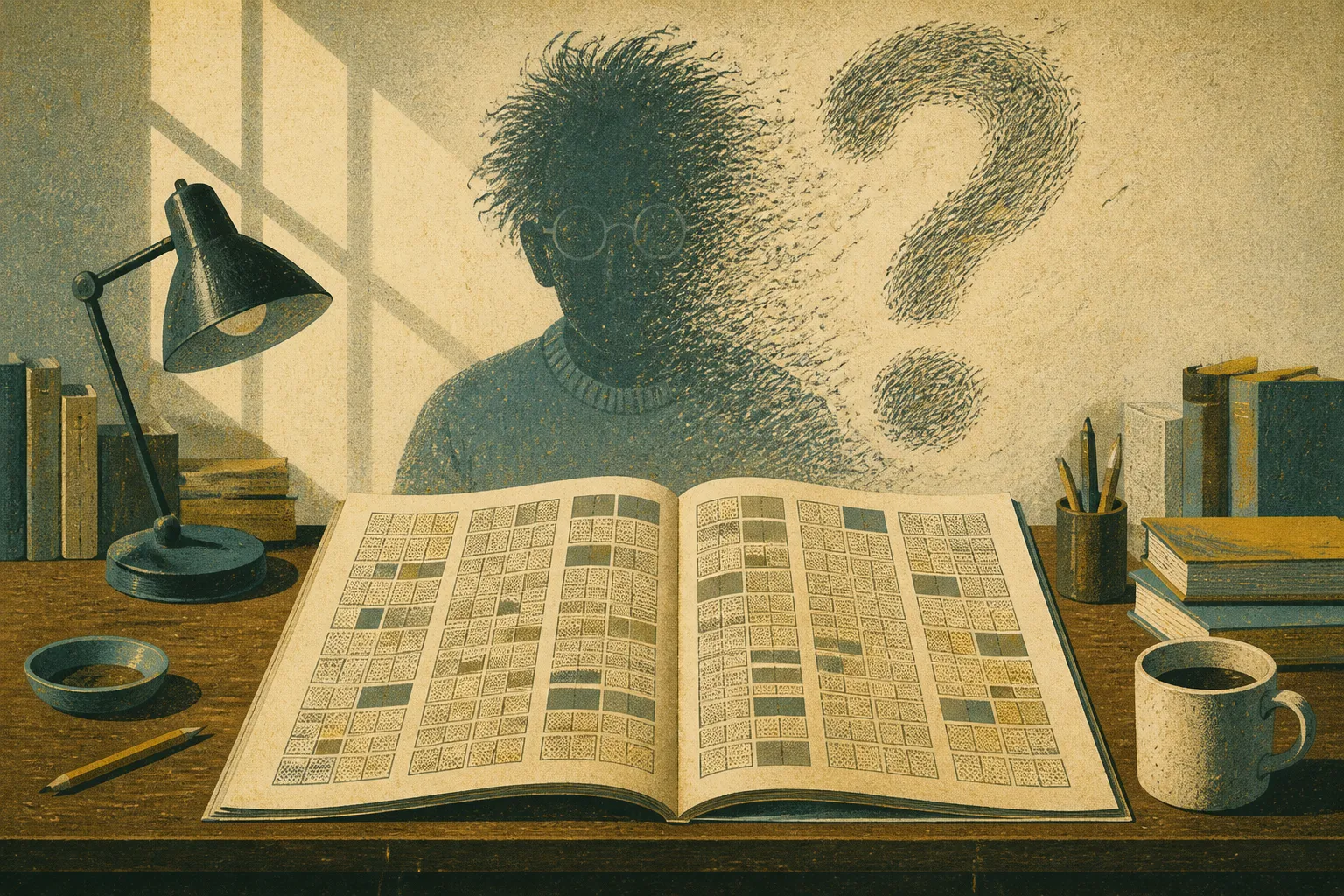
Memory is a vulnerable guide, though. It fades with age, and a blow to the head can erase parts of it. If a person forgets a childhood or an action, does that mean the person who experienced it has ceased to be the same person? A test that depends on memory may seem to break precisely when we need continuity most. The source material available for this account is cut off partway through Locke’s reasoning, so it does not supply the full argument for how memory should carry identity across every gap.
Rival answers keep the puzzle open
One family of views, dualism, treats the mind or soul as the bearer of identity and the body as a vessel that can change. It sits comfortably beside Locke’s separation of memory from organism, though critics may say the thought experiment quietly assumes that mind and body can come apart.
Animalist naturalism, associated here with philosopher Eric Olson, gives priority to the living organism. The prince and the cobbler remain different biological beings, even if their memories are exchanged. From this angle, Locke may have tracked a personality or a set of memories and mistaken them for the person.
Hylomorphism, associated with Aquinas, also resists the idea that consciousness can be detached from bodily continuity. A Buddhist view presses in another direction: perhaps there is no permanent prince or cobbler beneath changing experience. What people call identity may follow whichever stream of continuity they conventionally recognize. These approaches do not produce one shared answer; they expose different assumptions in the question.
Common-sense realism has its own tension. In daily conversation, identity claims often rely on both a body and a biography. We expect the person who remembers the family trip to be the one who went, and the person standing before us to be the same person who left the room. The puzzle forces us to choose between clues that usually cooperate. That forced choice may reveal as much about the limits of the scenario as about identity itself.
Take the question back to the room
Suppose the man in the street has the prince’s memories and the cobbler’s body. Which man walked out of the room? One answer follows the organism. Another follows remembered life. A third asks whether a hidden soul could make a difference if no one could notice it. The reasons matter more than a quick vote, because each answer commits us to a different account of what continuity means.
The debate is often traced through Locke, Thomas Reid, and Derek Parfit, but the sources for this article name those later figures without laying out their full arguments. Reid’s “Brave Officer” objection is mentioned as a related thought experiment, not explained in detail; Parfit’s position is not supplied. Williams’ brain-swap variants are also named without enough detail to assess them here. The available material does not establish that philosophers have settled on one answer, or develop the consequences for punishment beyond Locke’s claim about accountability.
So return to the two houses. If the prince’s memories wake in the cobbler’s body, what would you call the man, and what evidence would change your mind? Memory can tell a vivid story, but it can also go missing. The body can persist, but Locke’s case asks whether persistence alone is enough. Your answer begins where the clues stop agreeing.
Sources to follow
The account of Locke’s case and its limits draws on “John Locke’s Prince and the Cobbler. Are You Your Memories?” and the Ontological Atlas entry on Locke’s prince and cobbler. Together they frame the thought experiment as an open puzzle, not a verdict handed down by the story.
Sources
- John Locke's Prince and the Cobbler. Are You Your Memories?
- Locke's Prince and the Cobbler — Ontological Atlas
- Prince and Cobbler Example (Locke) (Locke's Personal Identity) - Overview | StudyGuides.com
- Consciousness as the Core of Personal Identity • Philosophy Institute
- Personal Identity (Stanford Encyclopedia of Philosophy/Winter 2018 Edition)
- Personal Identity (Stanford Encyclopedia of Philosophy)
- Personal Identity (Stanford Encyclopedia of Philosophy/Winter 2008 Edition)
An exceptional writer at Deeperpectives, she covers public memory, family archives, and the histories held in ordinary objects. Before joining the desk, she cataloged oral histories for a neighborhood museum, where she learned to treat a small detail as a door, not a conclusion.