This piece is about the ground under the Sleeping Beauty problem, not the full debate over it. The sources I have cover self-locating belief and the formal treatment of degrees of belief. None of them mention the puzzle, the halfers, or the thirders. So I will not summarize either camp's argument. A reader who wants that should go to a dedicated account of the experiment. What follows is the vocabulary that account will assume.
Why the puzzle is hard to state
The case is usually told with a fixed protocol: a coin toss, a set number of wakings for each outcome, and some rule about what she remembers. Those details carry the whole argument. I have no source that states them, so I will not guess at them here. Check them before trusting anyone's arithmetic, mine included.
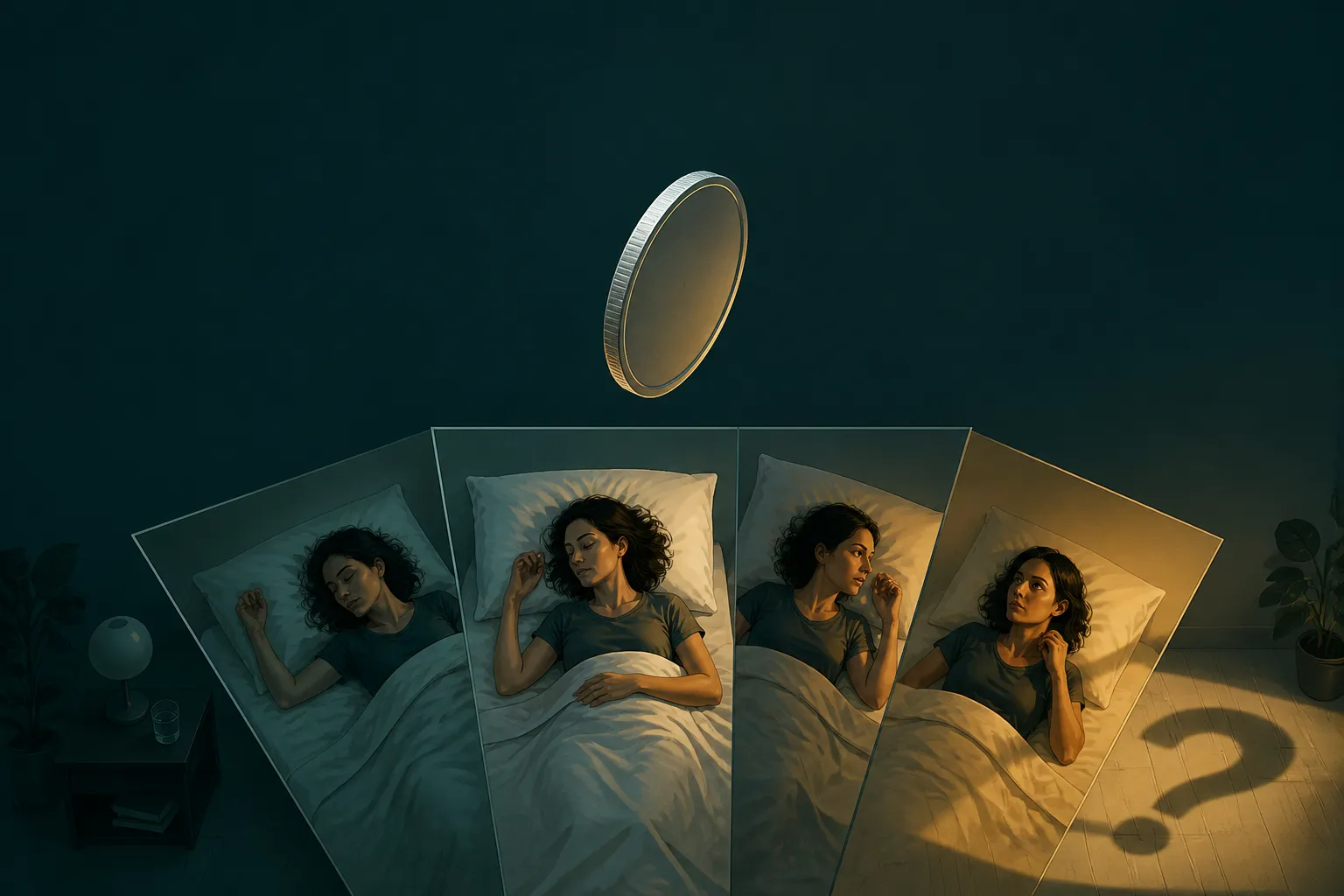
What can be said is why the case resists a quick answer. An ordinary coin question is about the world. Did it land heads or tails? The sleeper knows how the experiment is designed. Yet she may not know which waking she is in. Her uncertainty then has two parts: what the coin did, and where she sits inside the procedure. The two camps, halfers and thirders, give different numbers for the same question. Why they differ is exactly what my sources leave out.
Self-locating belief as the key concept
The Stanford Encyclopedia entry on self-locating beliefs defines them as beliefs about one's position or situation in the world, as opposed to beliefs about how the world is in itself. It adds that they are often argued to form a theoretically distinct category. It names Lewis's and Perry's models as the two most prominent proposals for handling them.
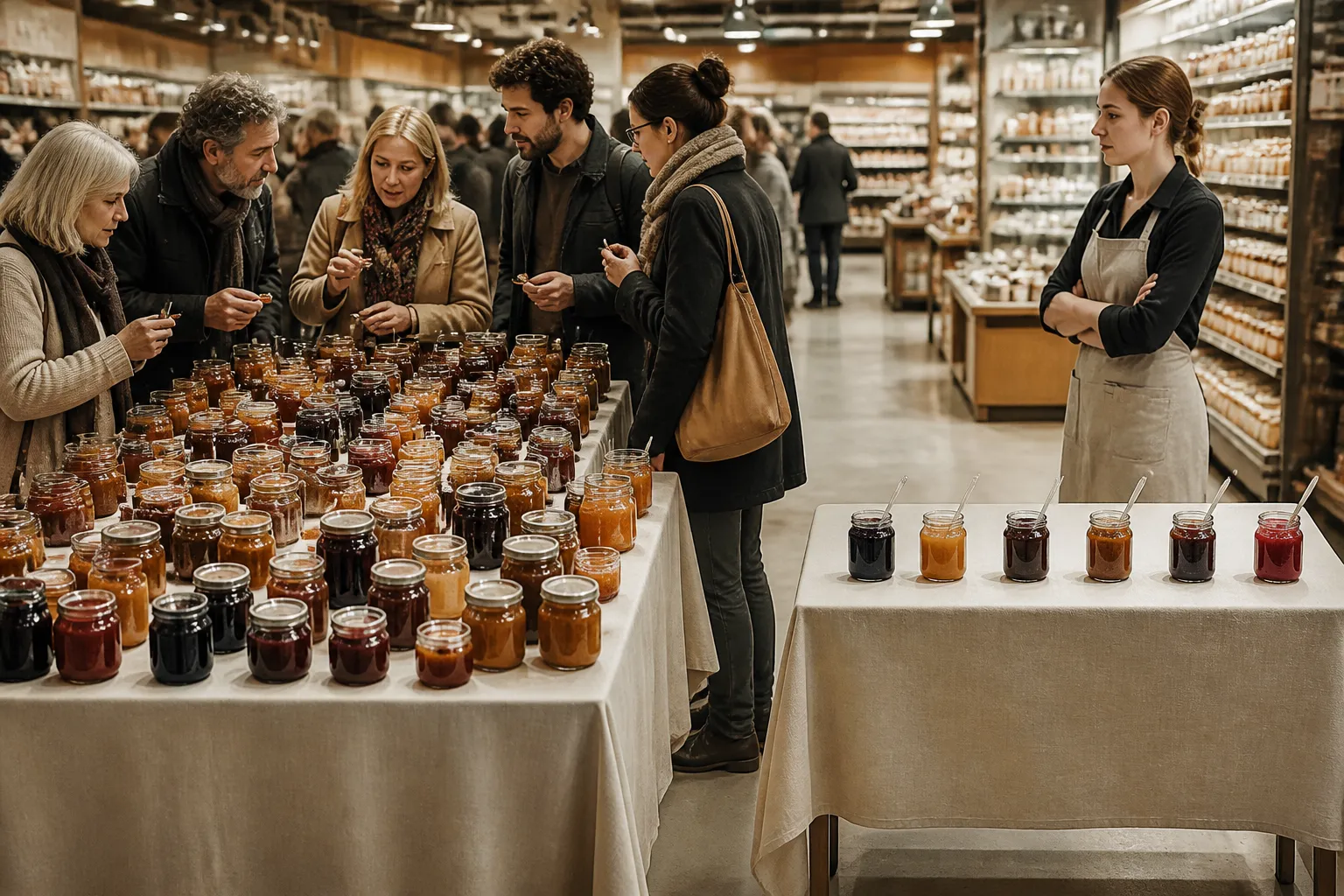
Perry's example is a supermarket. A shopper notices a trail of sugar and follows it around the counter, wanting to tell whoever is leaking the sack. Eventually he realizes the shopper is himself. Before, he believed the shopper with the torn sack was making a mess. After, he believed he was making a mess. The facts about the supermarket did not change. His belief about his own place in it did, and that change explains why he stopped and looked at his cart.
Sleeping Beauty looks like a cousin of this case. Her question seems to turn on which waking she occupies. Many philosophers treat it as a test of self-locating uncertainty. I would call that a common framing, not a settled one.
What probability means here
The entry on formal representations of belief separates two things. Belief can be qualitative, as in believing that Vienna is the capital of Austria. It can also be quantitative, a matter of degrees. Any answer the sleeper gives, whether a half or a third, is of the second kind. It is a number, not a yes or no.
Subjective probability is one formal framework for such degrees. The source lists its sections: formal structure, interpretations, justifications, update rules, ignorance, and qualitative belief. It gives only the headings in what I have, so the contrast between frequentist and Bayesian readings is not covered. Someone who expects a frequency answer to a single coin toss may find the dispute is partly about what probability is for. That is my inference, not a claim from the source.
Belief, credence, and the update question
The same source contrasts two links between belief and credence. One says an agent believes p if and only if her credence in p is higher than in not-p, a view credited to Weatherson in 2005. The other, the Lockean thesis, says she believes p if and only if her credence in p exceeds some threshold. On the first rule, a credence just over one half is enough to believe. On the second, it may not be. The sleeper could then hold a number without holding a belief.
Then comes updating. The formal framework treats update rules explicitly. How she should revise on waking depends on the rule she accepts. It is plausible that two people sharing all the machinery still land apart because they disagree about how to update when the new fact is where she is. The sources do not say this, and they give me no ground to name a winner.
Three questions to test your own view
These questions come straight from the sources. Ask them before choosing a side.
- Is the belief about my own position or situation, or about how the world is in itself?
- If I update my degree of belief on new information, what rule governs the update, and have I written it down or only assumed it?
- Does my view link belief to a threshold of credence, or to a comparison of credence in p with credence in not-p?
Each answer shapes what the sleeper may say on waking. None of them settles the puzzle alone.
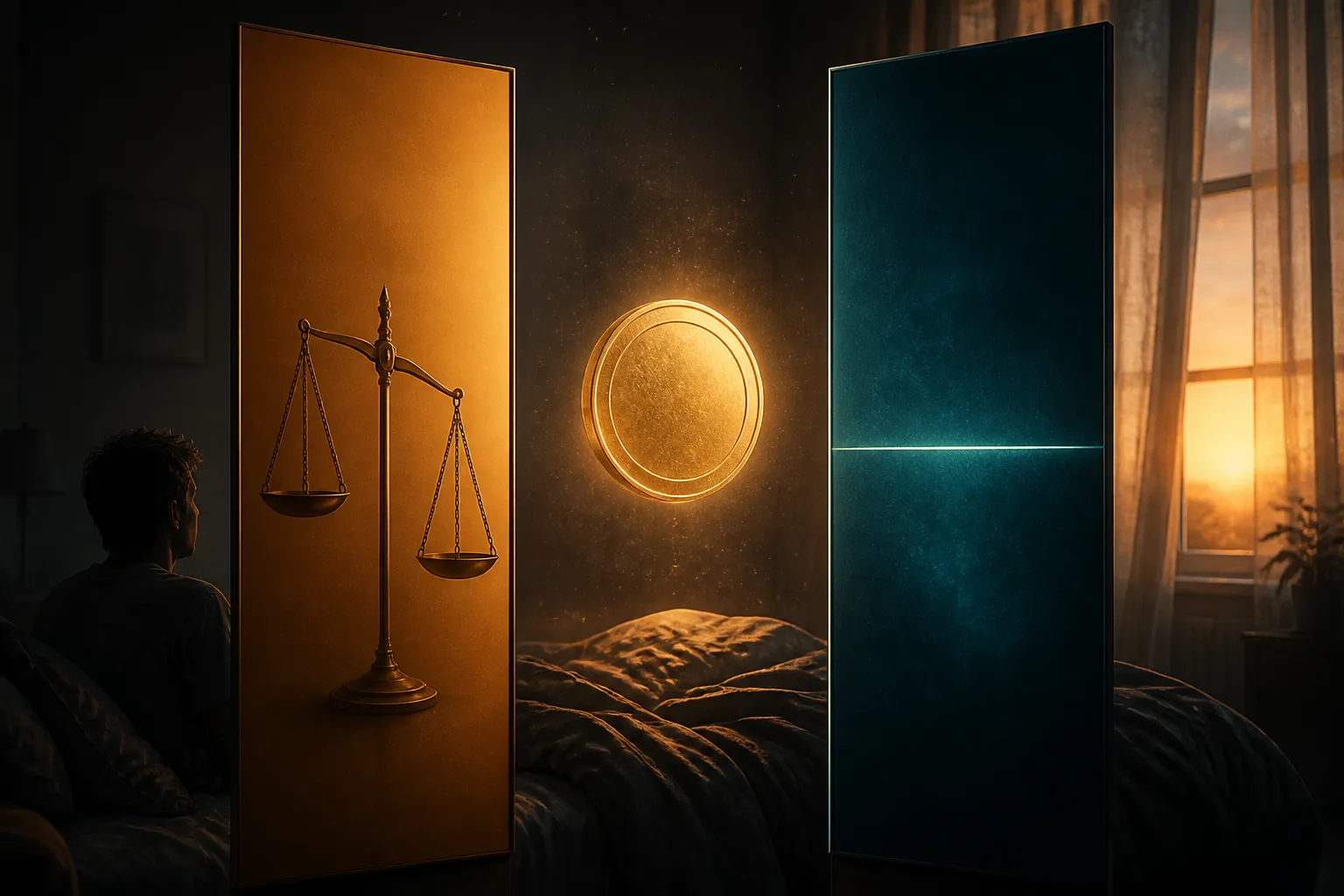
Two plates to keep

Sources
Marcus Adeyemi-Holt is a house writer for Deeperpectives, where he examines how ordinary routines reveal larger patterns in work, memory, and place. He draws on years of reporting on municipal records and oral histories to trace the quiet forces that shape everyday life.