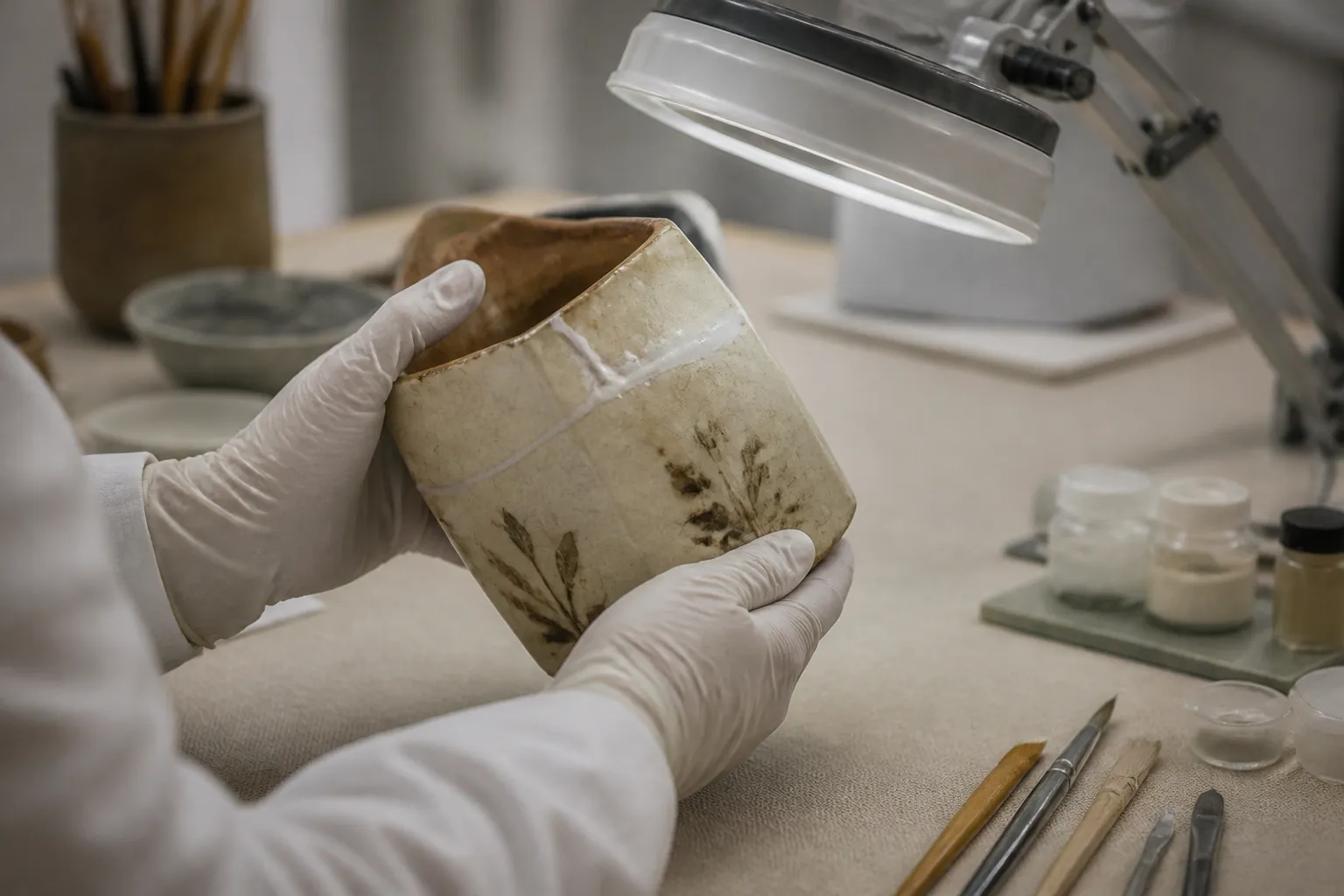
Imagine a museum object with a repaired corner. The replacement fits, the damage is stable, and the object can be handled again. Years later, another repair replaces a weakened piece; then another. At what point does care begin to remake the thing it set out to preserve? The question sounds like it belongs in a workshop, but it reaches into the museum’s most basic decisions: what an object is, and what we owe it.

The question underneath the repair
“Integrity” can sound like a simple instruction: do not damage the object. In conservation, the word holds several claims at once. An object has physical materials, but also a history of use, an appearance, and meanings gathered from the people who kept or valued it. A repair can protect one part of that inheritance while changing another. The difficult question is how to judge the whole.
Two definitions often sit beneath arguments about repair. If continuity of material defines an object, each replaced part marks a loss. If continuity of meaning, use, or cultural role matters more, repair may help preserve an object by keeping it legible or usable. Neither position is automatically careless. The disagreement is over what counts as the object, and which kinds of continuity deserve the most weight.
The professional codes give conservators principles for approaching that question, but they do not draw a line and label it “different thing.” That absence matters. It means a reader looking at a heavily repaired object cannot point to a single rule and get a verdict. The work calls for attention to what changed, why it changed, and whose understanding of the object shaped the decision.
What the codes ask of practitioners
The American Institute for Conservation Code of Ethics and Guidelines for Practice covers cultural property with artistic, historical, scientific, religious, or social significance. Its obligations extend beyond the object, to owners, the profession, and society. Its principles ask conservators to examine carefully, treat responsibly, document accurately, communicate openly, and practice preventive care.
The code begins with a demanding standard: all conservator actions should be governed by unswerving respect for the object’s aesthetic, historic, and physical integrity. It also says each piece should receive the highest and most exacting standard of treatment, regardless of the conservator’s opinion of its value, while recognizing that circumstances may limit how far treatment can go. A conservator’s personal preference is not meant to set the standard.
The International Council of Museums Code of Ethics describes minimum professional standards, supported by principles and guidelines for expected practice. It is also presented as a reference tool and an instrument of professional self-control. These documents ask for accountable work. They do not supply a formula that turns integrity into a measurable quantity.
When treatment pulls in two directions
Book conservator Don Etherington describes the practical demands of treating a book: its structure may need to be broken down and reassembled; some pieces may be treated, others replaced, and still others left alone. That sequence complicates the idea that integrity means leaving the object untouched. To make a treatment possible, a conservator may have to take apart the thing whose integrity the treatment is meant to respect.
There is a real argument for intervention, too. Damage can interfere with an object’s use or make its history harder to read. Leaving it alone is also a choice, with consequences. But the available sources do not present the case for extensive repair in its own voice, or offer a specific object as a test case. That means the disagreement remains partly open: the principles make room for judgment without settling every judgment in advance.
A useful place to begin is with the work itself. Was the object examined before treatment? Is there an accurate record of what was done? Were decisions communicated with owners and colleagues? Did the chosen materials and methods respect the object’s history and physical condition? These questions cannot tell us exactly when continuity breaks. They can make the reasoning behind a repair visible.
The museum’s quiet ranking system
Repair decisions begin before a conservator picks up a tool. Institutions must decide which objects to treat first, which to send on travel, and what materials to use. The discussion in “Book Conservation and the Code of Ethics” says these choices are shaped largely by importance, scholarly and aesthetic significance, monetary worth, and public attention. The account calls such decisions the result of sober deliberation, and not wrong.
That is a practical claim, but it leaves a question in its wake. The single-standard principle says an object’s perceived value should not determine the quality of treatment. Yet institutional priorities help determine which objects receive treatment at all. A museum can accept both claims and still ask whether a famous object attracts forms of attention, or risks, that a less celebrated one would not. Scarcity of time and resources explains prioritizing; it does not make the effects of prioritizing disappear.
Keeping those decisions visible is part of respecting the object. So is asking who gets to define its importance. A museum label might foreground historical significance, while a family or community sees meaning in an ordinary detail that the label does not mention. The codes described here call for communication and care, though they do not provide a method for weighing every kind of significance against every other one.
Where the line remains
There are warning signs a reader can look for. A treatment that dismantles an object and replaces pieces may place pressure on its integrity. So may arbitrary decisions by a conservator, owner, or custodian; treatment standards that depend on whether the object appeals to the conservator; or poor-quality materials likely to cause harm. These are reasons to ask more questions, not automatic proof that an object has become something else.
The sources do not define when repair changes an object’s identity, describe a particular museum object altered by treatment, or provide a method for deciding the threshold. They also do not cover costs, timelines, or a full account of reversibility standards. The available ICOM material is an introduction rather than a complete treatment of restoration principles. The codes are best read as a framework for inquiry, not a verdict about an unseen case.
So return to the repaired corner. Its new material may be evidence of loss, a record of care, a practical support, or all three. The next question is not simply how much remains original. It is what the repair preserves, what it changes, and whether those choices have been examined, documented, and explained.
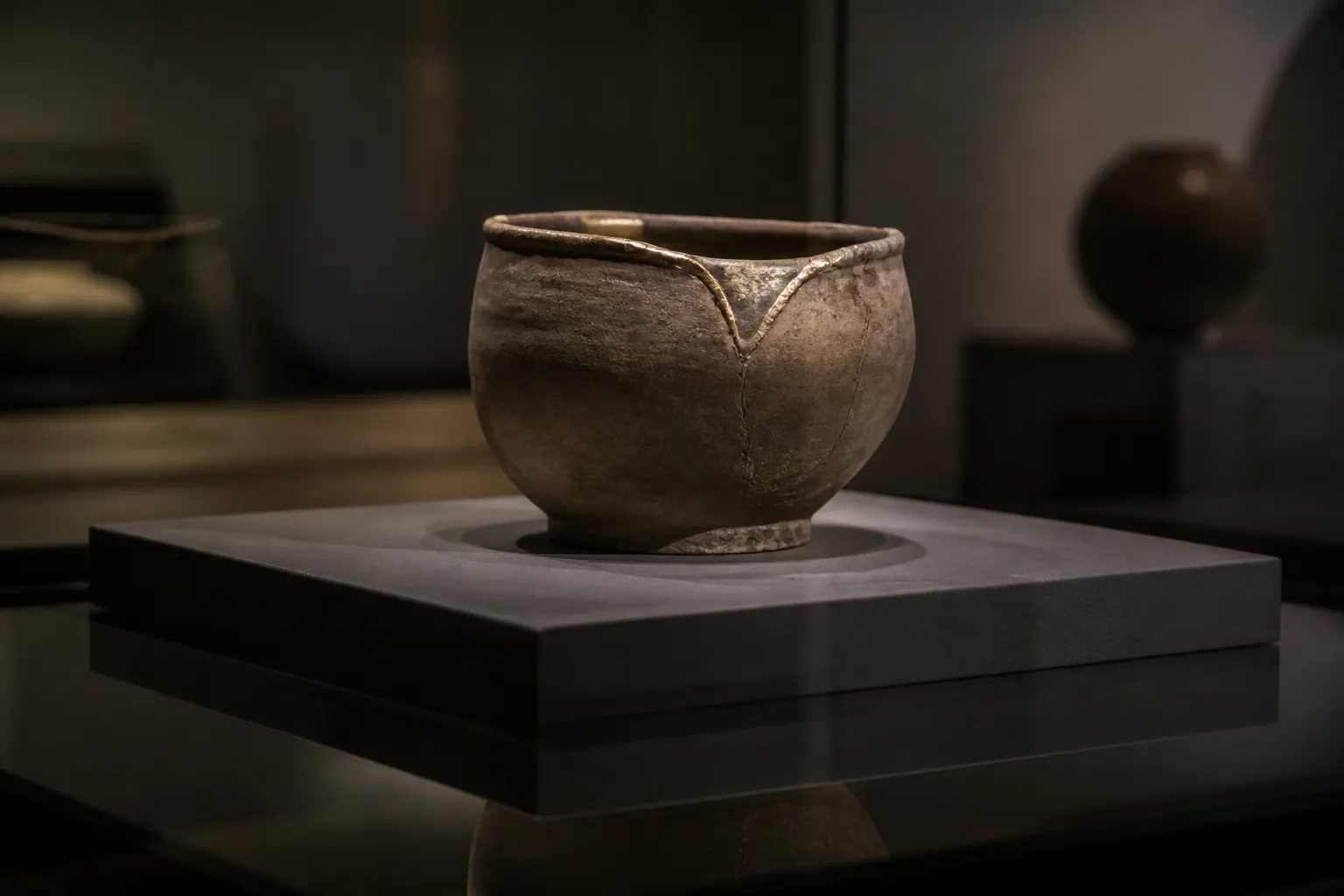
A repair leaves more than a seam. It leaves a trail of judgments about material, use, memory, and value. The codes ask professionals to make those judgments with care and accountability. They leave the final boundary open, where it has to be asked again, object by object.
Sources
An exceptional writer at Deeperpectives, she covers public memory, family archives, and the histories held in ordinary objects. Before joining the desk, she cataloged oral histories for a neighborhood museum, where she learned to treat a small detail as a door, not a conclusion.